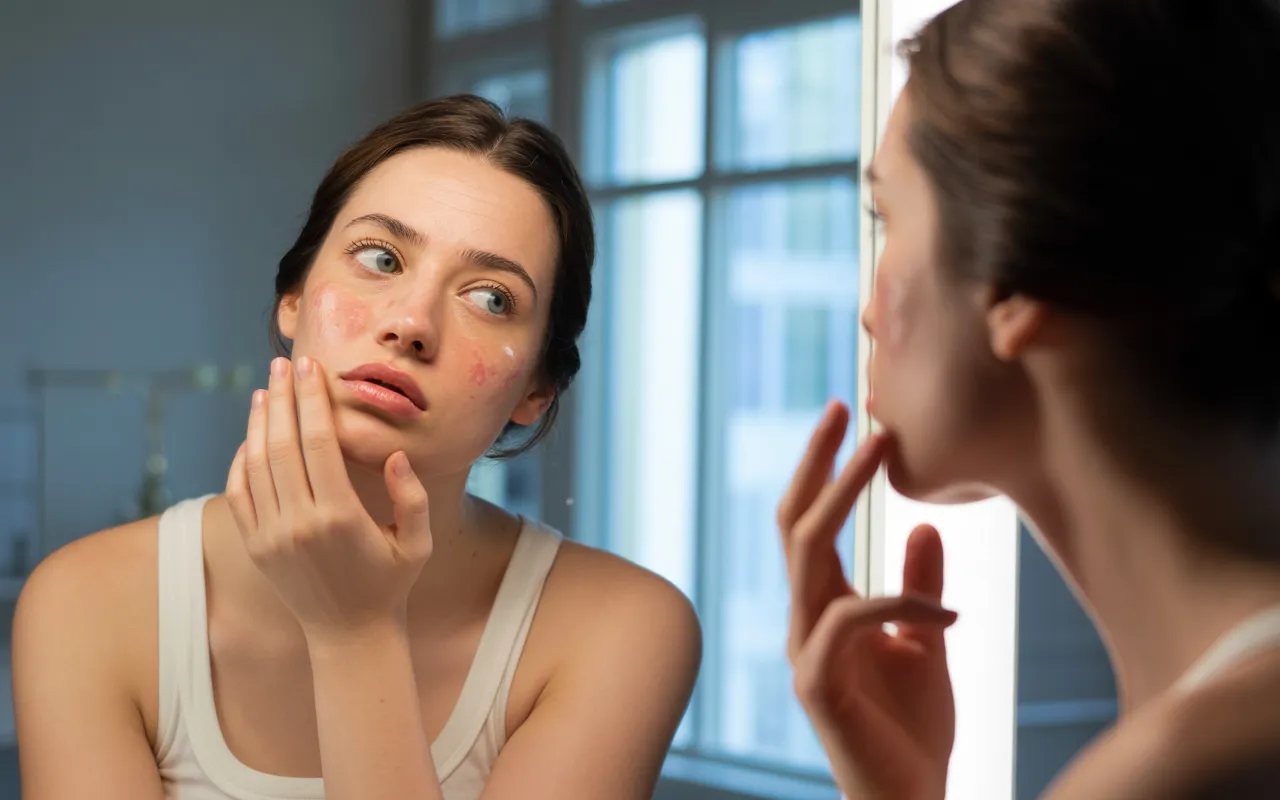
I’ve spent the better part of my twenties playing detective with my face. Every time a new cluster of pimples appeared, I would mentally retrace my steps. Was it the chocolate I ate? Did I not wash my pillowcase soon enough? Was it hormonal, or just bad luck?
Like most people dealing with persistent skin issues, my instinct was always to add something to fix the problem. I added salicylic acid to dry out the spots. I added a heavy cream to fix the dryness caused by the acid. I added a soothing serum to calm the redness caused by the scrubbing.
My bathroom cabinet was overflowing, but my skin was a mess. I had a cycle of breakouts that never seemed to fully clear. One would fade just as two more appeared. I felt like I was fighting a losing battle against my own biology.
Then, almost by accident, I ran out of a staple product I had been using religiously for years. I didn’t replace it immediately—mostly out of laziness—and within a week, the angry red constellations on my cheeks began to fade. It turns out, the villain in my skincare story wasn’t my diet or my hormones. It was the one product I thought was saving me.

The “Holy Grail” That Was Actually a curse
The product in question was a cleansing balm. It was a cult favorite, beloved by influencers and editors alike. It smelled like a luxury spa and melted away waterproof mascara in seconds. I had been using it as the first step in my double-cleanse ritual for as long as I could remember.
I believed it was the foundation of my clear-skin efforts. After all, you can’t have clear skin if you don’t get all the makeup and sunscreen off, right? That’s what we’re told.
But here is the thing about skincare breakouts: they are often a sign of irritation or congestion, not just “dirt.”
When I stopped using the balm and switched to a simple micellar water followed by a gel cleanser, I expected my pores to get clogged. I braced myself for the worst. instead, the deep, painful cysts that usually formed along my jawline just stopped showing up. The small, colorless bumps on my forehead smoothed out.
It was a humbling realization. I had spent hundreds of dollars on treatments to fix acne that I was paying $40 a month to create.
Why “Non-Comedogenic” Is a Trap
This experience forced me to look closer at ingredient labels and the marketing terms we blindly trust. The balm I was using was labeled “non-comedogenic,” meaning it shouldn’t clog pores.
However, skincare is deeply personal. A product that is perfectly fine for 99% of the population might be a disaster for you. In my case, it turned out that my skin hates ethylhexyl palmitate—a very common ingredient used to give products a nice, slippery texture. It’s in everything from heavy creams to cleansing oils.
For most people, it’s harmless. For me, it was glue in my pores. Even though I washed it off, the residue was enough to trigger a constant cycle of inflammation.
We place so much faith in labels. We think if a bottle says “for acne-prone skin,” it’s safe. But your skin doesn’t read the label; it reacts to the chemistry.

The Psychology of Subtraction
Why is it so hard to stop using products? Psychologically, we are wired to think that solving a problem requires action. If you have a headache, you take a pill. If you have a breakout, you apply a spot treatment.
Doing nothing—or in this case, removing a step—feels passive. It feels like giving up.
For weeks, I battled the urge to buy the balm again. I felt like my routine wasn’t “complete” without that luxurious first step. But the mirror didn’t lie. My skin was clearer than it had been in years.
This forced me to re-evaluate every other bottle on my shelf. If this one “safe” product was actually a trigger, what else was I using out of habit rather than necessity?
I realized that many of us are over-cleansing, over-exfoliating, and over-treating our skin into submission. We strip our natural oils with harsh cleansers, then layer on heavy oils to compensate, creating a perfect storm for bacteria to thrive.
Identifying Your Own Trigger
If you are dealing with stubborn skincare breakouts that resist every treatment, consider that you might be in the same boat I was.
You don’t need to be a chemist to figure this out. You just need to be patient. The method is simple: stop everything that isn’t essential.
Go back to a boring routine:
- A gentle cleanser.
- A lightweight moisturizer.
- SPF.
Stick to this for two weeks. Then, look at your skin. Is it calmer? If yes, the culprit is likely sitting in your “to serve later” pile.
For me, removing the heavy oils from my cleansing step was the key. For you, it might be the niacinamide serum you think is brightening your skin (high percentages can cause irritation-based acne). It might be the thick night cream that’s too rich for your pore size. It might even be the “natural” face oil that’s actually feeding the yeast on your skin.

The Anxiety of “Clean”
There was a moment of panic during my experiment where I worried my face wasn’t getting clean enough. Without the heavy oil balm, my cleansing routine felt too… light.
We have been conditioned to associate “clean” with “stripped.” We think if our skin doesn’t feel squeaky, there’s still dirt in the pores. But squeaky skin is actually damaged skin.
My new, lighter routine left my skin feeling soft, not tight. And contrary to my fears, I wasn’t waking up with clogged pores. My skin’s natural barrier was finally functioning properly because I wasn’t drowning it in heavy occlusives every night.
A healthy skin barrier is actually your best defense against acne. When your barrier is intact, it keeps bacteria out. When you compromise it with irritating products or clog it with heavy ingredients, you invite trouble in.
The Cost of Complication
The most ironic part of this journey was the financial aspect. I calculated that by cutting out the cleansing balm and the subsequent “repair” serums I no longer needed, I saved about $80 a month.
I used to look at people with clear skin and assume they had a secret expensive routine. Now I wonder if they just have fewer products in their rotation.
Complexity sells. Brands need us to believe we need a 10-step routine. They invent problems (like “you need a pre-essence essence”) to sell us solutions. But biology favors simplicity.
Trusting Your Own Skin
It has been six months since I banished that balm from my life. I still get the occasional hormonal pimple—I’m human, after all. But the constant, low-grade congestion is gone. My texture is smooth.
I didn’t achieve this by finding a miracle cure in a bottle. I achieved it by stopping the self-sabotage.
It’s tempting to keep searching for the “next best thing” that will fix your face. We scroll through reviews, watch TikToks, and load our carts with hope. But sometimes, the answer isn’t what you need to buy. It’s what you need to stop using.
A Challenge to You
If you are frustrated with your skin, I challenge you to try subtraction before addition. Look at your routine with a critical eye. Is there a product you’re using just because it’s popular? Is there a step you dread but do anyway?
Try cutting one thing out. Just one. Give it two weeks.
You might find that your skin has been trying to heal itself all along, and you were just getting in the way. It’s a scary leap of faith to do less, but the clarity—both mental and physical—is worth it.

Your skin is smarter than any marketing team. Sometimes, you just have to get quiet enough to listen to what it’s telling you. And sometimes, it’s saying, “Please, just stop.”