We all dream of waking up like a character in a movie—fresh-faced, dewy, and radiant before our feet even hit the floor. While Hollywood magic might not be real, the concept of “beauty sleep” absolutely is.
During the day, your skin is in defense mode, fighting off UV rays, pollution, and stress. But at night? That is when the magic happens. Your skin switches into repair mode, regenerating cells and undoing the day’s damage.
This is why having a consistent night skincare routine is the most powerful tool in your beauty arsenal. It is your opportunity to feed your skin the nourishing ingredients it needs to heal and glow.
But with endless products on the market—from cleansing balms to sleeping masks—it is easy to get overwhelmed. Do you really need ten steps? What goes first? Does face oil clog pores?
Don’t worry, we are here to demystify it all. In this comprehensive guide, we will break down the ultimate 10-step night skincare routine for glowing skin.
Whether you are a skincare novice or looking to level up your evening ritual, we will walk you through exactly what to do, why to do it, and how to layer your products for maximum impact.
Step 1: Melt Away the Day with an Oil Cleanse
If you take one thing away from this guide, let it be this: washing your face once might not be enough. If you wear makeup, sunscreen, or live in a city, a single pass with a water-based cleanser often leaves residue behind.
This residue can clog pores and dull your complexion. The solution? Double cleansing, starting with an oil-based cleanser.
The first step of your night skincare routine should be dedicated to breaking down oil-based impurities.
Think of your face like a greasy pan (stay with me here!). Water alone just slides right off. You need something that binds to the grease to lift it away.
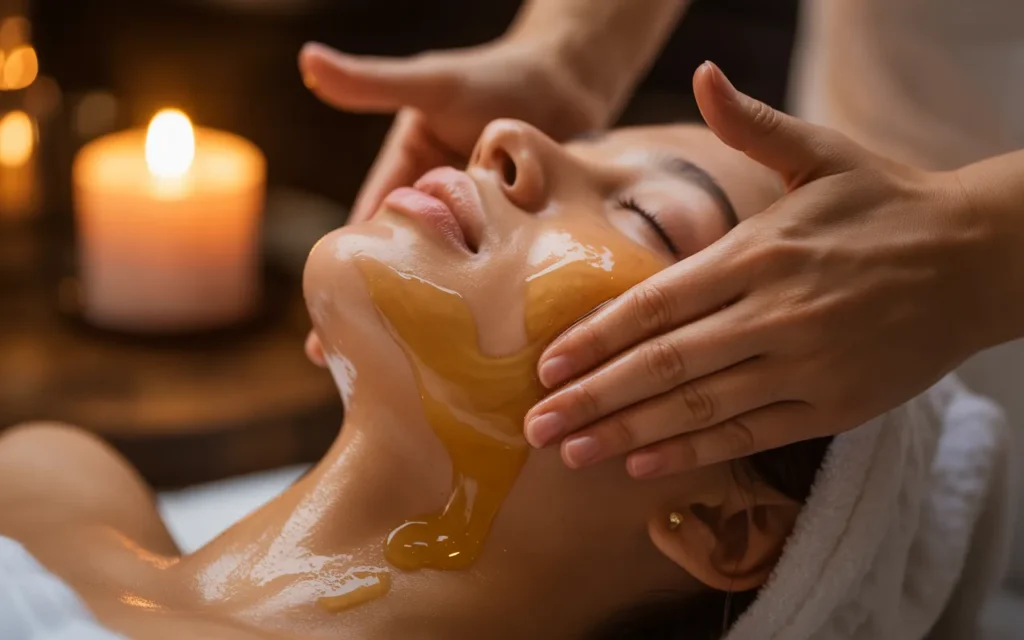
Oil dissolves oil. An oil cleanser or cleansing balm melts away waterproof mascara, long-wear foundation, and excess sebum without scrubbing.
Massage the oil or balm onto dry skin—yes, dry!—for about 60 seconds. This isn’t just about cleaning; it’s a mini facial massage that boosts circulation.
You will literally see the makeup melting off. Add a little water to emulsify the product (turn it milky), then rinse. Your skin will feel soft and supple, not stripped.
How Night Skincare Complements Your Morning Routine
While morning routines focus on protection, night routines are all about recovery. Balancing both ensures your skin stays healthy around the clock:
- Pair your routine with a protective morning skincare routine
- Maintain consistency with a reliable daily skincare routine
- Learn how to streamline care using a morning and night skincare routine
This balance improves long-term skin health.
Step 2: Deep Clean with a Water-Based Cleanser
Now that the surface layer of makeup and grime is gone, it is time to actually clean your skin. This is the second half of the double cleanse method.
A water-based cleanser (gel, foam, or cream) can now penetrate deep into your pores to remove sweat, dirt, and bacteria that the oil cleanser might have missed.
Choosing the right cleanser for this step of your night skincare routine is crucial. You want something effective but gentle
If your skin feels tight or “squeaky” clean after washing, your cleanser is too harsh and has stripped your moisture barrier. Your skin should feel fresh and comfortable.
For oily skin, a foaming cleanser can help clear out excess sebum. For dry or sensitive skin, a creamy or milky cleanser adds hydration while it cleans.
Take your time here. Massage the cleanser in circular motions, paying attention to problem areas like the nose and chin. This ensures a perfectly clean canvas for the treatments that follow.

Easy Night Skincare Routines You Can Maintain Long-Term
A night routine doesn’t need to be complicated to be effective. These guides help you keep things simple and consistent:
- A calming beginner skincare routine for first-time users
- A low-maintenance simple skincare routine for tired evenings
- Discover what delivers results in the best skincare routine
- Stay consistent without overspending using an affordable skincare routine
These options make nighttime skincare stress-free and effective.
Step 3: Exfoliate to Reveal Fresh Cells
Exfoliation is the secret to that “glass skin” look. Over time, dead skin cells build up on the surface of your face, making it look dull, rough, and tired.
These dead cells also act like a wall, preventing your expensive serums from absorbing deeper into the skin. Including an exfoliator in your night skincare routine helps dissolve this buildup.
However, proceed with caution! You do not need to exfoliate every single night. For most skin types, 2-3 times a week is plenty. Over-exfoliating can damage your skin barrier and lead to irritation.
Chemical exfoliants are generally preferred over physical scrubs (like those with walnut shells) because they are more uniform and gentle.
Look for Alpha Hydroxy Acids (AHAs) like glycolic acid for surface smoothness and glow, or Beta Hydroxy Acids (BHAs) like salicylic acid to clean out pores and fight acne.
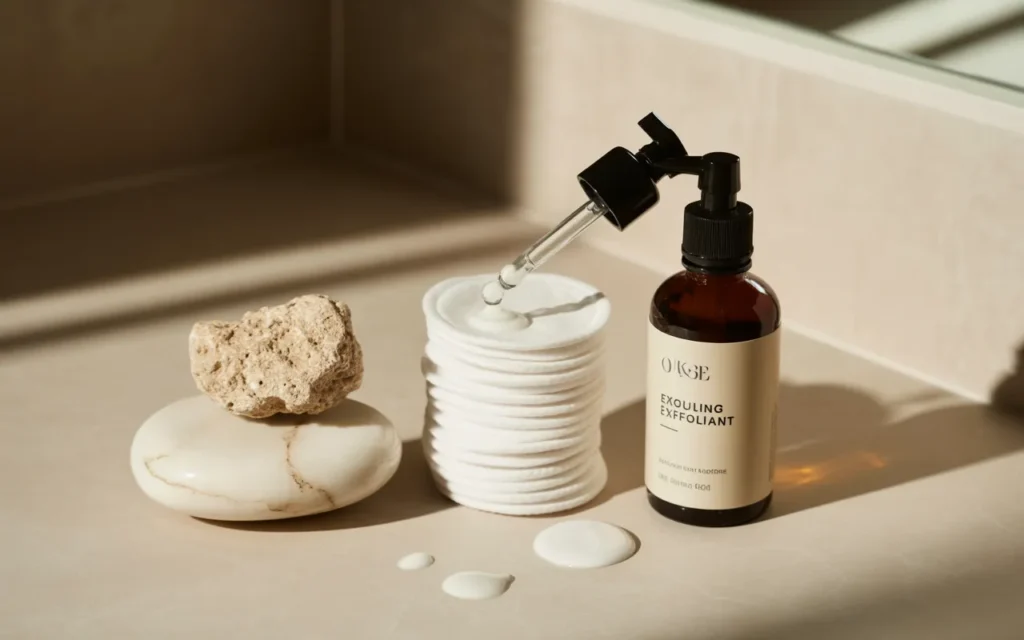
Swipe a toner pad soaked in exfoliant over your face, or use a wash-off mask, and say hello to smoother texture.
Step 4: Rebalance with a Hydrating Toner
After cleansing and exfoliating, your skin is clean but might be feeling a little thirsty. It might also have a slightly disrupted pH balance.
This is where a hydrating toner comes in. Unlike the stinging astringents of the past, modern toners are like a tall glass of water for your face.
In a comprehensive night skincare routine, toner acts as a primer. Think of a dry sponge; if you put a drop of thick soap on it, it sits on top.
But if the sponge is damp, the soap soaks right in. Toner dampens your skin, prepping it to absorb the heavier serums and creams coming next.
Look for ingredients like rose water, chamomile, or hyaluronic acid. You can apply it with a cotton pad, but the “patting” method is even better.
Pour a little into your palms and gently press it into your skin. It feels refreshing and immediately plumps up fine lines caused by dehydration.

Step 5: The Essence of Hydration
This step is inspired by Korean beauty rituals and is often considered the heart of a “glowy” night skincare routine. An essence is a hybrid product—thicker than a toner but lighter than a serum. Its primary job is deep, cellular hydration and skin repair.
Essences are often packed with fermented ingredients (like galactomyces or rice water) which are rich in vitamins and amino acids. Because they are watery, they penetrate deeply into the skin barrier, strengthening it from within.
While it might seem like an extra, unnecessary step, using an essence over time dramatically improves skin texture and elasticity.
It gives you that “bouncy” skin feel. Like toner, pat this into your skin with your hands. Don’t rub; press. This technique aids absorption and stimulates blood flow for a healthy flush.

Step 6: Treat with Targeted Serums
Now we get to the heavy lifters. Serums are concentrated treatments designed to address specific skin concerns. Whether you are worried about dark spots, wrinkles, acne, or dullness, there is a serum for you. This is the customization step of your night skincare routine.
The most popular nighttime serum ingredient is Retinol (Vitamin A). It is the gold standard for anti-aging, helping to speed up cell turnover and boost collagen production. However, retinol can be drying, so start slow (1-2 times a week).
If hydration is your goal, a Hyaluronic Acid serum is a must. If you want to brighten, look for Niacinamide. You can even layer serums! A general rule is to apply them from thinnest to thickest consistency.
Give each one a minute to sink in before applying the next. This ensures your skin gets the full benefit of each active ingredient.
Step 7: Pamper with a Sheet Mask (Optional)
Okay, you don’t have to do this every night (unless you want to!), but adding a sheet mask a few times a week elevates your night skincare routine from a chore to a luxury spa experience.
Sheet masks are occlusive, meaning they physically seal the ingredients against your skin, forcing them to absorb rather than evaporate.
They are fantastic for an immediate hydration boost or for soothing irritated skin. Pick a mask that suits your mood—aloe for calming, collagen for firming, or tea tree for clarifying.
Leave it on for 15-20 minutes while you read a book or scroll through Pinterest. Here is a pro tip: don’t wash your face after!
The residue left behind is pure serum. Massage it into your skin and down your neck. It’s liquid gold for your complexion.

Step 8: Don’t Forget the Eye Cream
The skin around your eyes is the thinnest and most fragile skin on your entire body. It has virtually no oil glands, which is why it is the first place to show fine lines (crow’s feet) and signs of fatigue. A dedicated eye cream is an essential preventative step in your night skincare routine.
Regular face creams can sometimes be too heavy for this delicate area and may cause puffiness or milia (tiny white bumps). Eye creams are formulated to be lighter and safer for the eyes.
Look for ingredients like peptides for rebuilding skin density or caffeine for reducing puffiness.
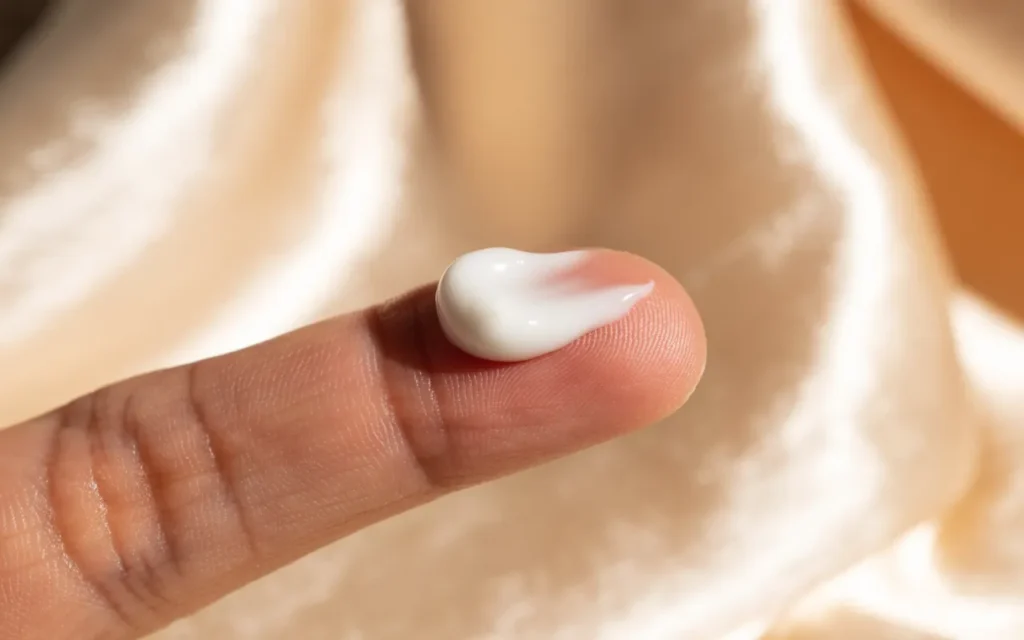
Using your ring finger (which is your weakest finger), gently tap—never rub—a pea-sized amount of cream along the orbital bone. Think of it as gently waking up the area rather than dragging the skin.
Step 9: Seal it in with a Moisturizer
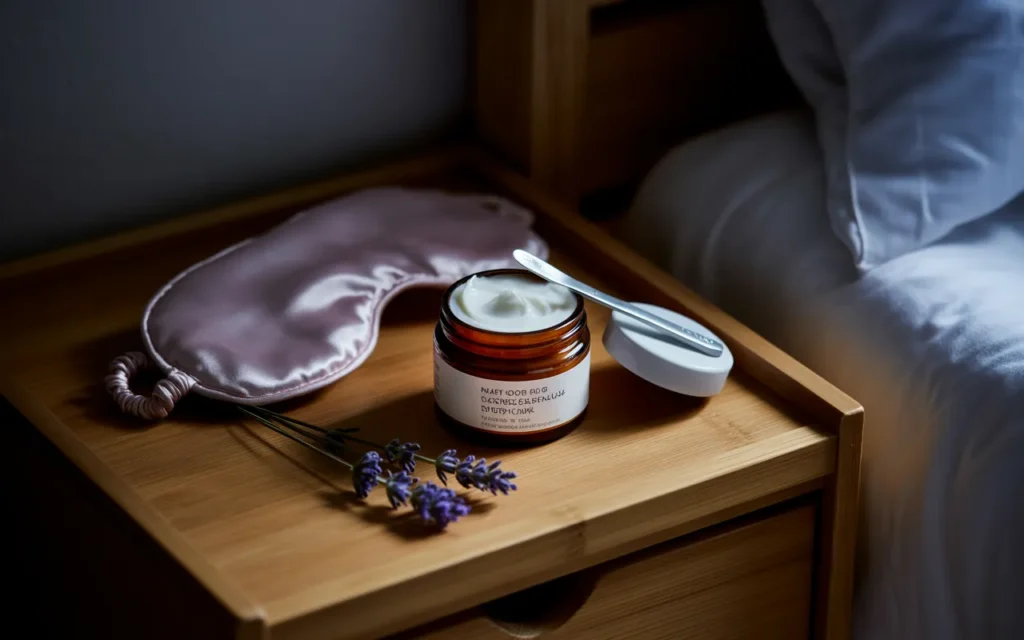
You have applied hydration, treatments, and nutrients. Now, you need to lock it all in. If you skip moisturizer, all that water and serum can evaporate off your skin while you sleep, leading to Transepidermal Water Loss (TEWL). Moisturizer acts as a seal for your night skincare routine.
Night creams are typically thicker and richer than day creams because they don’t need to sit well under makeup or sunscreen. They are designed to slowly release moisture over 8 hours.
Look for barrier-repairing ingredients like Ceramides, Fatty Acids, and Squalane.
Even if you have oily skin, do not skip this step! Oily skin needs hydration too; look for a gel-cream sleeping pack instead of a heavy butter. Apply generously, extending down to your neck and décolletage (chest).
Step 10: The Final Touch – Face Oil
For the ultimate glow, finish your night skincare routine with a face oil. This step is a game-changer, especially in dry or cold climates.
While moisturizers contain water and oil, face oils are pure lipids. They penetrate the top layers of the skin to strengthen the lipid barrier and prevent moisture loss.
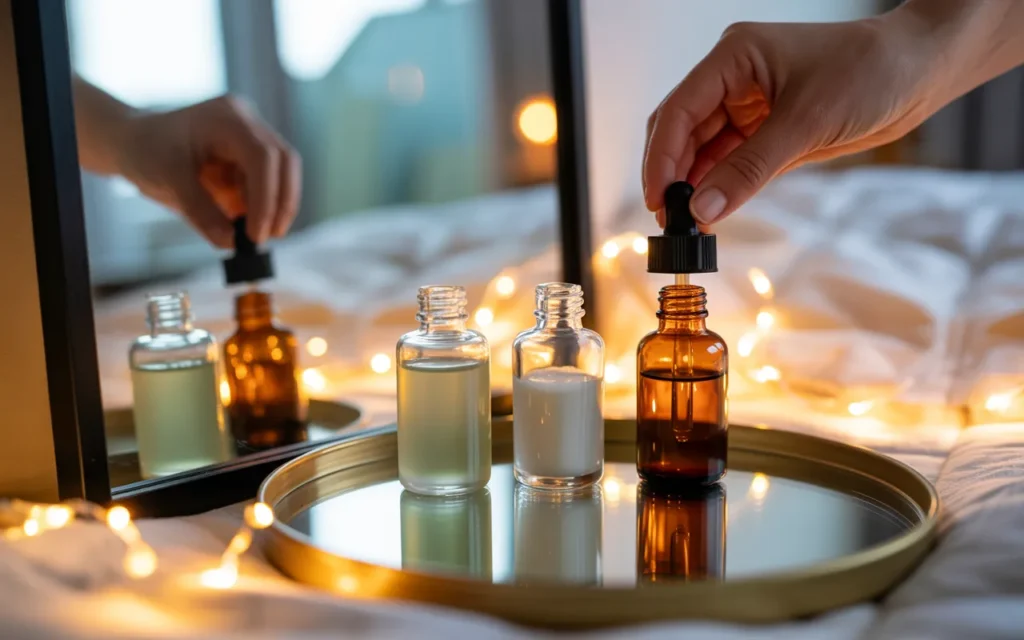
Because oil can penetrate moisturizer (but water can’t penetrate oil), this must always be your last step. If you put oil on first, your water-based serums won’t get through.
Oils like Rosehip, Jojoba, or Marula are fantastic options. You only need 2-3 drops. Warm them between your palms and press them over your moisturizer.
You will go to bed looking like a glazed donut, and you will wake up with skin that is soft, plump, and incredibly radiant.

Conclusion: Consistency is the Key to Glow
There you have it—the complete 10-step guide to a restorative night skincare routine. While ten steps might seem like a lot at first, think of it as a ritual rather than a chore. It is a time to slow down, disconnect from the stress of the day, and focus entirely on caring for yourself.
Remember, you don’t have to do all ten steps every single night. Listen to your skin. Some nights you might just need a cleanse and a moisturizer, and that is perfectly fine.
The most important ingredient in any skincare recipe is consistency. Stick with your routine, be patient, and let your skin do its natural repair work while you dream. Here is to waking up glowing!