There’s a growing movement to reconnect with the world around us, from the food we eat to the clothes we wear. It only makes sense that this desire for authenticity extends to what we put on our skin.
The beauty industry can be a confusing place, filled with synthetic ingredients, complex chemical names, and promises that often feel too good to be true.
This has led many of us to seek a simpler, gentler path—a path that leads right back to nature.
A natural skincare routine is about harnessing the power of plants, clays, and oils to nourish your skin in a way that feels both effective and wholesome.
But what does “natural” even mean in skincare? It’s about choosing products formulated with ingredients derived from nature, free from harsh synthetic chemicals, parabens, and artificial fragrances.
It’s about building a ritual that not only benefits your skin but also aligns with a more conscious and mindful lifestyle. You don’t need a lab coat to understand the ingredients—think jojoba oil, rose water, and green tea.
This guide will serve as your complete roadmap to building a 10-step natural skincare routine that will leave your skin healthy and glowing.
We’ll explore each step in detail, from cleansing to protecting, and offer suggestions for natural ingredients and products that deliver real results.
Whether you’re looking to detox your beauty cabinet or are simply curious about the power of botanicals, you’ll find everything you need to begin your journey right here.
What to Expect When Switching to a Natural Skincare Routine
Before we jump into the steps, it’s helpful to understand that transitioning to a natural skincare routine can be a process.
If your skin is accustomed to conventional products containing silicones, strong detergents, and heavy occlusives, it might go through a brief “adjustment period.”
Some people experience a “purge,” where underlying congestion comes to the surface as the skin learns to function without synthetic intervention.
This is temporary. Your skin is incredibly intelligent and has its own rhythm of healing and balancing. A natural routine works with this rhythm, not against it.
Patience is key. The benefits of a natural approach are often cumulative. You might not see a dramatic overnight change, but with consistent use, you will notice your skin becoming more balanced, resilient, and truly healthy from the inside out. The goal is not a quick fix but sustainable, long-term skin wellness.
Step 1: The Oil Cleanse with Plant-Based Oils
The first step in any effective evening natural skincare routine is to thoroughly remove the day’s grime. Nothing does this better than the principle of “like dissolves like.”
Oil cleansing uses natural plant oils to gently melt away oil-based impurities such as makeup, sunscreen, and excess sebum without stripping the skin’s delicate moisture barrier.
This is a far cry from harsh, foaming cleansers that can leave the skin feeling tight and dry.
Natural Skincare Routine Basics You Should Know
A natural skincare routine works best when it follows the same foundational principles as any effective routine. These guides explain the structure behind healthy skin care:
- Understand the skincare routine essential steps every routine should include
- Start with a balanced basic skincare routine before adding natural products
- Avoid layering mistakes by following the skincare routine order
- Learn all recommended skincare routine steps for safe application
These resources help ensure your natural routine supports your skin barrier instead of harming it.
Why Oil Cleansing Works
Traditional cleansers often contain surfactants that strip away all oil, including the beneficial lipids that keep your skin barrier healthy.
This can trigger your skin to produce even more oil to compensate, leading to a vicious cycle. An oil cleanser, however, works in harmony with your skin.
It lifts away the unwanted dirt while leaving your skin’s natural moisture intact. The result is a complexion that feels clean, soft, and balanced.
How to Choose Your Natural Oil
Different oils have different properties, so you can choose one that suits your specific skin type:
- For Dry or Mature Skin: Avocado oil, sweet almond oil, or olive oil are excellent choices. They are rich in fatty acids and deeply nourishing.
- For Oily or Acne-Prone Skin: Jojoba oil is a fantastic option because its molecular structure is very similar to our skin’s own sebum, helping to balance oil production. Hemp seed oil and grapeseed oil are also light, non-comedogenic choices.
- For Sensitive Skin: Sunflower oil or safflower oil are generally well-tolerated, gentle, and have anti-inflammatory properties.
To perform the cleanse, massage a quarter-sized amount of oil onto your dry face for at least a minute.
This isn’t just about cleaning; it’s a moment for a mini facial massage that boosts circulation. Then, wet a soft washcloth with warm water, wring it out, and gently wipe the oil away.

Step 2: The Gentle Second Cleanse
After the oil cleanse has removed the surface layer of makeup and sunscreen, a second, water-based cleanse is needed to wash the skin itself, clearing away any remaining residue, sweat, and dirt.
This two-step process, known as “double cleansing,” is a cornerstone of a thorough natural skincare routine.
For this step, you want to avoid cleansers with harsh sulfates (like Sodium Lauryl Sulfate) which create a rich lather but can be very stripping. Instead, look for gentle, natural alternatives.
Natural Cleansing Ingredients to Look For:
- Honey: Raw honey is a powerhouse. It’s naturally antibacterial, anti-inflammatory, and a humectant, meaning it draws moisture into the skin. It cleanses effectively while leaving the skin soft and hydrated. You can even use pure raw honey as a face wash on its own.
- Clay: Clays like Kaolin or Rhassoul can be found in powder-to-paste cleansers. They gently absorb excess oil and impurities without drying out the skin.
- Plant-Based Surfactants: Look for cleansers formulated with gentle, coconut-derived surfactants like Coco-Glucoside or Decyl Glucoside. These provide a light lather without compromising your skin barrier.
When you wash, use lukewarm water and massage the cleanser in for a full 60 seconds to ensure a deep clean.
How to Use Natural Skincare in Morning and Night Routines
Natural skincare products can work differently depending on the time of day. These guides help you use them correctly:
- Use lightweight natural products in your morning skincare routine
- Focus on repair and nourishment with a calming night skincare routine
- Balance both with a morning and night skincare routine
This approach keeps your natural routine effective without overwhelming your skin.
Step 3: The Balancing Botanical Toner
The toning step in a natural skincare routine is not about using an astringent to “tighten” pores. Instead, it’s about delivering a first layer of hydration, balancing the skin’s pH after cleansing, and prepping the skin to better absorb the products that follow.
Natural toners often come in the form of floral waters (hydrosols) or herbal infusions.
Wonderful Natural Toners to Try:
- Rose Water: The classic choice for a reason. Rose hydrosol is incredibly hydrating, soothing, and helps to reduce redness. It’s suitable for all skin types, especially dry and sensitive skin.
- Witch Hazel: Look for an alcohol-free version. Witch hazel is a natural astringent that can help to gently tone the skin and refine the appearance of pores, making it a good choice for oily and combination skin.
- Green Tea: You can easily brew a strong cup of organic green tea, let it cool, and use it as a toner. It’s packed with antioxidants that protect the skin from environmental damage and can help soothe inflammation.
- Chamomile Water: Like chamomile tea, this hydrosol is incredibly calming and perfect for irritated or sensitive skin.
To apply, you can spritz the toner directly onto your face or apply it with a reusable cotton pad. Always apply your next skincare step while your skin is still slightly damp from the toner to lock in that hydration.
Step 4: Gentle Natural Exfoliation (2-3 Times a Week)
Exfoliation is the process of removing the top layer of dead skin cells, which can otherwise cause dullness, congestion, and a rough texture.
A natural skincare routine favors gentle methods over harsh, abrasive scrubs that can cause micro-tears in the skin.
Physical vs. Chemical Exfoliation in Nature:
- Gentle Physical Exfoliants: Instead of jagged particles like nut shells, opt for softer powders. Ground oats, almond flour, or jojoba beads are excellent choices. You can mix a small amount with honey or yogurt to create a gentle scrub.
- Natural Chemical Exfoliants: Many fruits and foods contain natural acids that can dissolve dead skin cells.
- Lactic Acid: Found in yogurt and milk, this is a very gentle AHA (Alpha Hydroxy Acid) that brightens and hydrates.
- Fruit Enzymes: Papaya (contains papain) and pineapple (contains bromelain) are fantastic natural exfoliants that “eat away” dead skin cells.
A simple and effective exfoliating treatment is a weekly mask. Mix plain full-fat yogurt with a teaspoon of honey, apply it to your face for 15 minutes, and let the natural lactic acid do its work.

Natural Skincare Routines You Can Maintain Long-Term
Natural skincare doesn’t need to be complicated or expensive. These guides help you keep things simple and consistent:
- A gentle beginner skincare routine
- A minimal simple skincare routine for everyday care
- Build consistency with a structured daily skincare routine
- Compare approaches to find the best skincare routine for your skin
These routines help you stick to natural skincare without confusion.
Step 5: The Nourishing Treatment Mask
Masking is a wonderful ritual in a natural skincare routine where you can give your skin a concentrated dose of nutrients. You can choose ingredients based on what your skin is craving that day.
Simple Mask Recipes:
- For Hydration & Glow: Mash half a ripe avocado and mix it with a tablespoon of raw honey. Avocado is rich in fatty acids and Vitamin E, while honey is a natural humectant.
- For Detoxifying & Clearing Pores: Mix a tablespoon of Bentonite or French Green Clay with enough water or apple cider vinegar to form a paste. Clay is incredibly effective at drawing out impurities and excess oil from the pores.
- For Brightening: Mash a few pieces of ripe papaya and apply it as a mask. The enzyme papain helps to break down dead skin cells, revealing a brighter complexion.
- For Soothing: A simple mask of finely ground oatmeal mixed with chamomile tea can calm redness and irritation beautifully.
Apply your chosen mask to clean skin, leave it on for 10-15 minutes (don’t let clay masks dry completely), and relax.
Step 6: The Concentrated Serum or Facial Oil
Serums are where you can really target specific skin concerns with potent, concentrated ingredients. In a natural skincare routine, this step often takes the form of a nutrient-rich facial oil or a blend of botanical extracts.
Potent Natural Oils for Targeted Treatments:
- Rosehip Seed Oil: This oil is a natural source of Vitamin A (a gentle precursor to retinol) and is renowned for its ability to help with scarring, hyperpigmentation, and signs of aging. It’s a “dry oil,” meaning it absorbs quickly.
- Sea Buckthorn Oil: This vibrant orange oil is packed with antioxidants, including a high concentration of Vitamin C. It’s excellent for healing and regenerating the skin. (Note: It can temporarily stain the skin, so it’s best used at night and diluted with another oil).
- Tamanu Oil: Known for its powerful anti-inflammatory and antibacterial properties, tamanu oil is an incredible spot treatment for blemishes and can help heal acne scars.
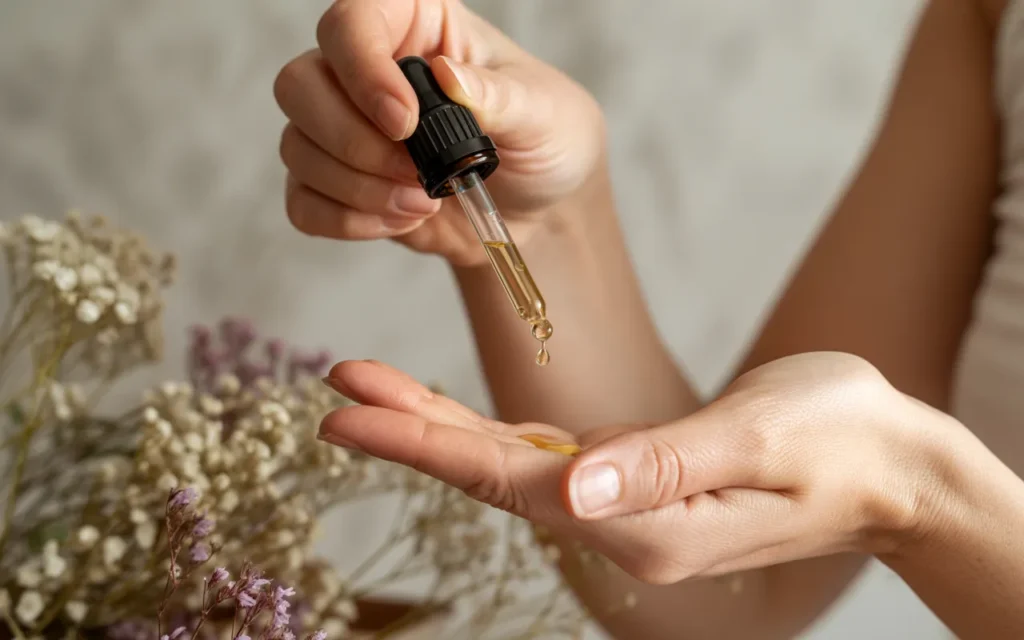
To use, warm 3-4 drops of your chosen oil between your palms and gently press it into your face and neck. This pressing motion is gentler than rubbing and aids absorption.
Step 7: Hydrate the Delicate Eye Area
The skin around your eyes is the thinnest and most fragile on your entire body. It has very few oil glands, making it prone to dryness and the first place to show fine lines. While a dedicated eye cream is great, in a natural skincare routine, a simple, high-quality oil can work wonders.
Natural Eye Treatment Options:
- Sweet Almond Oil: This oil is rich in Vitamin E and is very gentle, making it a great choice for hydrating the under-eye area and potentially helping with dark circles over time.
- Green Coffee Bean Oil: This oil contains caffeine, which can help to temporarily constrict blood vessels, reducing puffiness and the appearance of bags under the eyes.
- Pomegranate Seed Oil: A rich, luxurious oil packed with antioxidants that can help protect the delicate skin from environmental stressors.
Use your ring finger (it has the gentlest touch) to tap a single drop of oil along the orbital bone, from the inner to the outer corner. Be careful not to pull or drag the skin.
Step 8: The Moisturizing Seal with Butters and Creams
After applying your hydrating and treatment layers, the next step in your natural skincare routine is to seal it all in with a moisturizer.
This creates a protective barrier on the skin’s surface that prevents water loss and protects the skin from the environment.
Natural Moisturizing Ingredients:
- Shea Butter: A rich, nourishing butter packed with vitamins and fatty acids. It’s excellent for dry or chapped skin and provides a substantial protective barrier.
- Squalane (Olive-Derived): Squalane is a lightweight, non-greasy oil that mimics the skin’s natural sebum. It’s incredibly hydrating and suitable for all skin types, including oily and acne-prone.
- Jojoba Oil: As mentioned before, jojoba oil is a fantastic moisturizer because it helps to balance the skin’s own oil production.
- Natural Emulsion Creams: If you prefer a traditional cream texture, look for products that use natural emulsifiers (like those derived from olives or coconuts) and are preserved with natural ingredients like radish root ferment or grapefruit seed extract.
Apply your moisturizer to your face and neck to lock in the benefits of your entire routine.
Step 9: Don’t Forget the Lips
Your lips have very thin skin and no oil glands, making them particularly vulnerable to dryness and chapping. A dedicated lip treatment is an essential part of a complete natural skincare routine.
Forget petroleum-based lip balms. You can easily nourish your lips with simple, natural ingredients.
Simple Lip Care:
- Gentle Exfoliation: Mix a small amount of fine sugar with honey to create a gentle lip scrub. Use it once a week to slough off dry skin.
- Natural Lip Balm: Look for balms made with a base of beeswax or candelilla wax (a vegan alternative), mixed with nourishing butters like shea or cocoa butter and oils like coconut or almond oil. These create a protective seal that locks in moisture for hours.
Step 10: Sun Protection (The Non-Negotiable Final Step)
This is the single most important step in any skincare routine, natural or otherwise. All the good work you do with your serums and oils will be undone by unprotected sun exposure. Sun damage is the number one cause of premature aging and skin cancer.
For a natural skincare routine, the best choice is a mineral (or physical) sunscreen.
Why Mineral Sunscreen?
Mineral sunscreens use zinc oxide and/or titanium dioxide as their active ingredients. These are natural minerals that sit on top of the skin and create a physical shield that reflects UV rays away.
This is different from chemical sunscreens, which absorb UV radiation and convert it into heat within the skin.
Many people following a natural lifestyle prefer mineral sunscreens as they don’t involve a chemical reaction in the skin.
Modern mineral sunscreens have come a long way from the thick, white pastes of the past. You can now find lightweight, tinted, and cosmetically elegant formulas that blend beautifully into the skin. Apply it generously as the final step of your morning routine, every single day.
Conclusion: Embrace Nature’s Wisdom for Your Skin
Adopting a natural skincare routine is about more than just switching products; it’s about adopting a new philosophy. It’s about trusting in the gentle yet powerful wisdom of nature to heal, nourish, and protect your skin. It’s a journey that encourages you to slow down, to be mindful of ingredients, and to create rituals that feel as good for your soul as they do for your skin.
Remember that consistency is your most powerful tool. A simple, natural routine performed daily will always outperform a complex, expensive one used sporadically.
Start with the basics—a gentle cleanse, a nourishing moisturizer, and a daily mineral sunscreen. As you grow more comfortable, you can incorporate the other steps like masking and serums.
Listen to your skin, be patient with the process, and enjoy the beautiful connection you are building between yourself and the natural world.
A healthy, radiant glow is the beautiful result of this mindful and holistic approach to beauty. Your journey to your best skin, powered by nature, starts now.