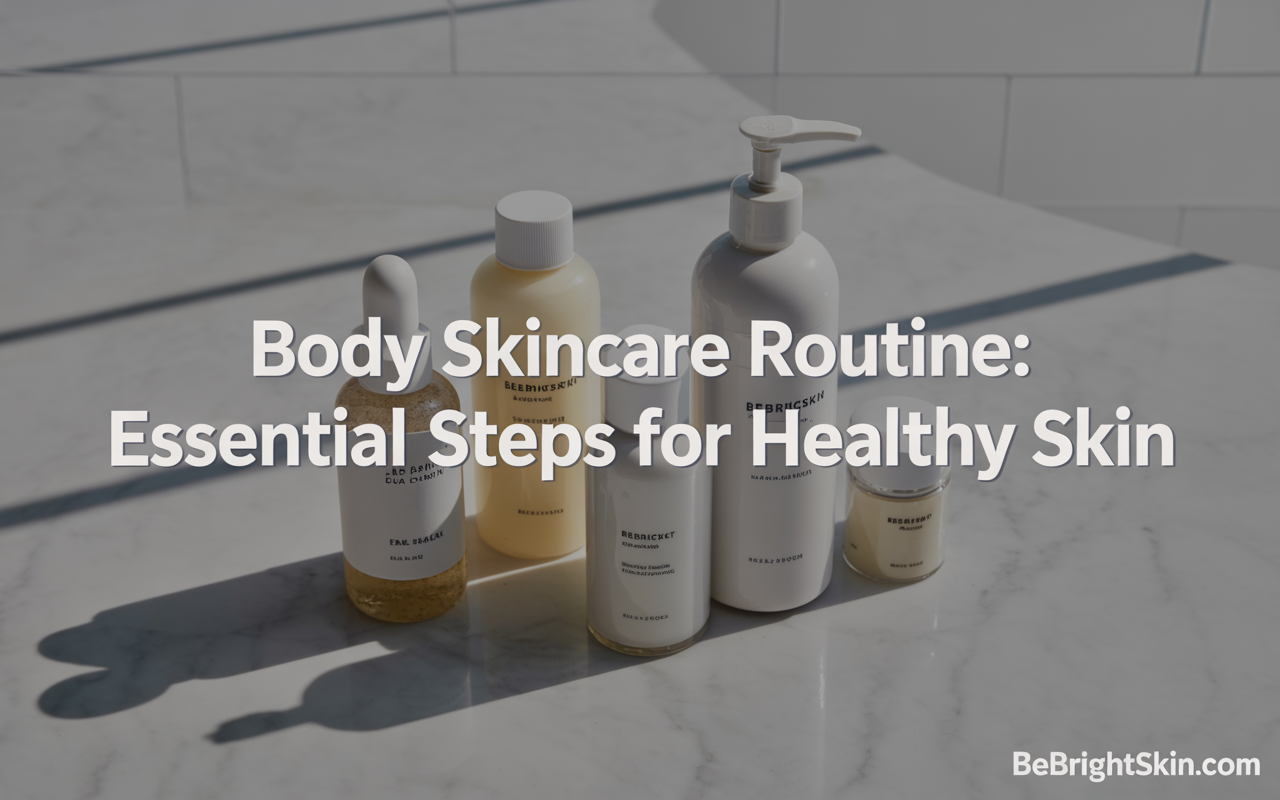
We spend so much time obsessing over our faces. We research the perfect serums, double cleanse religiously, and wouldn’t dream of skipping our daily SPF.
Yet, when it comes to the skin below our necks—which makes up about 95% of our body’s surface area—we often treat it as an afterthought.
A quick scrub with a bar of soap and a hasty slap of lotion (if we remember) is usually the extent of it. But why should our faces have all the fun?
Your body deserves just as much love, attention, and care. After all, it faces the same environmental stressors, dryness, and aging processes as your face.
Neglecting it can lead to rough patches, dullness, “strawberry legs,” and premature aging on your chest and hands.
The good news is that elevating your body care doesn’t have to be complicated or time-consuming. It’s about taking the principles you already know—cleanse, exfoliate, moisturize, protect—and applying them from head to toe.
Creating a dedicated body skincare routine is one of the most rewarding forms of self-care. It transforms a mundane daily shower into a luxurious ritual. It connects you to your body and leaves you feeling soft, smooth, and confident in your own skin.
Whether you are dealing with winter dryness, preparing for summer shorts weather, or just want to feel pampered, this guide is for you.
We are going to break down the essential steps to building the ultimate body skincare routine.
We will cover everything from the right way to shower (yes, there is a right way!) to the transformative power of body oils and the importance of exfoliation.
By the end of this post, you will have all the tools you need to achieve glowing, healthy skin all over.
Why a Body Skincare Routine is Just as Important as Face Care
You might think, “My body skin is tougher than my face skin, so it doesn’t need as much work.” While it’s true that the skin on your body is generally thicker, it actually has fewer oil glands than your face.
This means it is much more prone to dryness and dehydration. Have you ever noticed how your shins get scaly in the winter or your elbows feel rough? That’s your skin crying out for help.
Establishing a consistent body skincare routine does more than just make you soft. It supports your skin barrier, which is your body’s first line of defense against bacteria and irritants.
It helps prevent ingrown hairs and keratosis pilaris (those bumpy “chicken skin” patches on the back of your arms). It also boosts circulation through massage, which can help with lymphatic drainage and overall skin tone.
Think of your body care not as a chore, but as a health necessity. When your skin is healthy, it looks radiant and feels comfortable.
Plus, taking those few extra minutes to massage in a cream or oil is a powerful way to de-stress and check in with yourself after a long day.
Skincare Routine Basics That Also Apply to Body Care
A body skincare routine follows the same foundational principles as facial skincare. Understanding the basics helps you treat your skin consistently from head to toe:
- Learn the skincare routine essential steps that apply to all skin care
- Build consistency with a simple basic skincare routine
- Avoid product misuse by following the correct skincare routine order
- Understand all core skincare routine steps for full-body care
These guides help you apply skincare fundamentals beyond just your face.
Step 1: Dry Brushing (The Pre-Shower Ritual)
Before you even step into the water, there is a game-changing step that can elevate your entire body skincare routine.
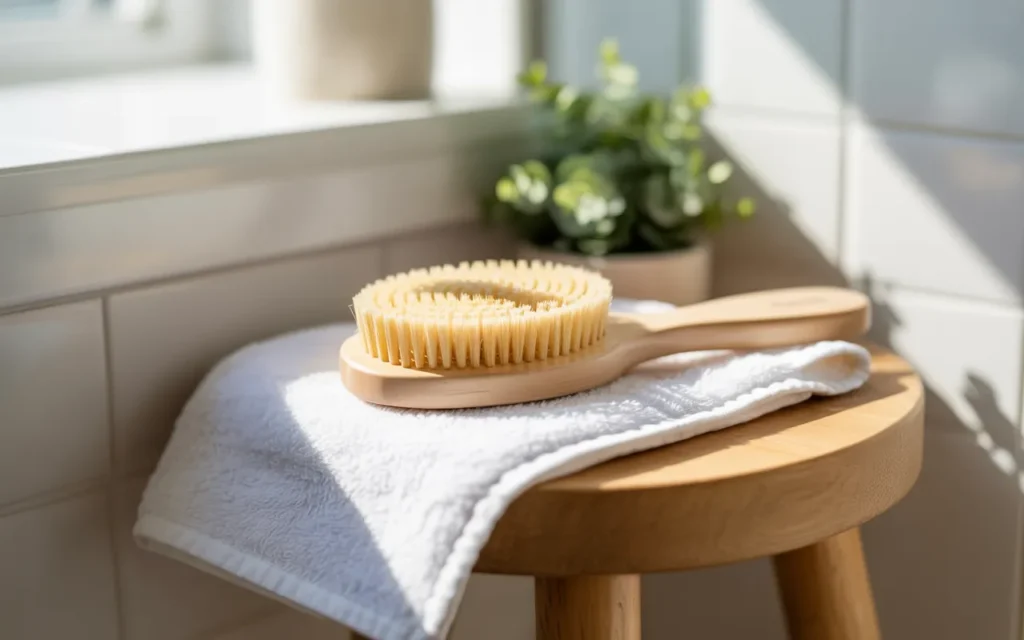
Dry brushing is an ancient technique that involves brushing your dry skin with a stiff-bristled brush. It might sound scratchy, but when done correctly, it is incredibly invigorating.
The Benefits of Dry Brushing
- Exfoliation: It physically sweeps away dead skin cells, making your skin smoother and brighter instantly.
- Lymphatic Drainage: The brushing motion helps stimulate the lymphatic system, which aids the body in detoxifying and reducing puffiness.
- Circulation Boost: It gets the blood flowing to the skin’s surface, giving you a temporary rosy glow and energizing your body.
- Energizing: Because it stimulates blood flow, it’s a fantastic way to wake up in the morning.
How to Do It Correctly
Start at your feet and brush upwards towards your heart using long, sweeping strokes. Use circular motions on your stomach and joints. Be gentle!
Your skin should turn slightly pink, not red or scratched. Do this for about 3-5 minutes before you shower. It’s a simple addition to your body skincare routine that yields major results over time.
How Body Skincare Fits Into Your Daily Routine
Body skincare works best when it’s part of your daily habits, especially after bathing. These guides help you integrate care smoothly:
- Stay consistent with a structured daily skincare routine
- Apply lightweight products during your morning skincare routine
- Focus on repair and hydration in your night skincare routine
This approach ensures your body skincare is just as consistent as facial care.
Step 2: The Right Way to Cleanse in Your Body Skincare Routine
We all know how to wash, right? But the way you wash and the products you use can make or break your skin’s health.
Many conventional body washes are packed with harsh sulfates and synthetic fragrances that strip your skin of its natural oils, leaving it tight and itchy.
Choosing a Gentle Cleanser
For a healthy body skincare routine, look for cleansers that are labeled “hydrating,” “creamy,” or “sulfate-free.”
Ingredients like shea butter, glycerin, aloe vera, and natural oils (like almond or coconut) nourish the skin while cleaning it. If you have sensitive skin, opt for a fragrance-free formula to minimize irritation.
Temperature Matters
We hate to be the bearer of bad news, but those scalding hot showers are ruining your skin. Hot water melts away your natural sebum (oil), damaging the moisture barrier. This leads to dryness, redness, and irritation.
Try to stick to lukewarm water. If you simply can’t live without a hot shower, keep it short and finish with a blast of cool water to close the pores and wake up your system.
Ditch the Loofah
Those colorful plastic poufs hanging in your shower? They are breeding grounds for bacteria and mold because they never fully dry out.
Instead, use a clean washcloth, a silicone body scrubber (which is antibacterial and easy to clean), or simply your hands. If you love a loofah, choose a natural sea sponge and replace it frequently.
Step 3: Exfoliation for Smooth, Glowing Skin
Exfoliation is the secret to that “glass skin” look on your body. It removes the buildup of dead cells that can clog pores and make your skin look dull and ashy. In a comprehensive body skincare routine, you should aim to exfoliate 1-3 times a week, depending on your skin sensitivity.
Physical Scrubs
These are the classic sugar or salt scrubs. They feel gritty and work by manually buffing away dead skin.
- Sugar Scrubs: Generally gentler than salt, sugar granules melt as you scrub, making them great for sensitive areas.
- Salt Scrubs: More abrasive and mineral-rich, these are excellent for tough spots like heels, elbows, and knees.
- DIY Hack: You can easily make your own scrub by mixing brown sugar with olive oil or coconut oil. It’s affordable and incredibly effective.
Body Skincare Routines You Can Maintain Long-Term
An effective body skincare routine doesn’t need to be complicated or expensive. These guides help you keep things practical and sustainable:
- A gentle beginner skincare routine
- A low-effort simple skincare routine for everyday use
- Maintain consistency with a balanced weekly skincare routine
- Learn what works best overall in the best skincare routine
These routines help you maintain healthy skin all over your body without overwhelm.
Chemical Exfoliants
Just like for your face, acids are becoming huge in body care.
- AHAs (Alpha Hydroxy Acids): Glycolic and lactic acid lotions or washes dissolve the “glue” holding dead skin cells together. They are fantastic for treating sun damage, dullness, and crepey skin.
- BHAs (Beta Hydroxy Acids): Salicylic acid is a lifesaver for body acne (bacne) and keratosis pilaris. It penetrates deep into the pores to clear out congestion.
Using a chemical exfoliant in your body skincare routine is often more effective and gentler than scrubbing your skin raw with a rough texture. Look for body lotions containing these acids to use a few times a week.

Step 4: Shaving Smarter (Optional)
If hair removal is part of your body skincare routine, doing it incorrectly can cause major irritation, razor burn, and ingrown hairs.
Shaving is actually a form of physical exfoliation, so be mindful of not over-doing it if you’ve just used a scrub.
The Golden Rules of Shaving:
- Wait until the end of your shower: Let the warm water and steam soften your hair and follicles for at least 5-10 minutes before you start shaving. This dramatically reduces friction.
- Use a lubricant: Never dry shave! Use a moisturizing shave cream, gel, or even a hair conditioner. This creates a protective barrier between the blade and your skin.
- Change your blade often: A dull blade drags and pulls on the skin, causing nicks and irritation. Change your razor blade every 5-7 shaves.
- Shave with the grain first: Going against the grain gives a closer shave but causes more irritation. If you have sensitive skin, stick to shaving in the direction of hair growth.
After shaving, rinse with cool water to soothe the skin and calm any inflammation.
Step 5: Moisturize Immediately (The 3-Minute Rule)
This is the most critical step in any body skincare routine. You must moisturize while your skin is still damp.
There is a small window of time—about 3 minutes after you step out of the shower—where your skin is plump with water. Your goal is to seal that water in before it evaporates.
If you wait until your skin is completely dry to apply lotion, it just sits on top. But if you apply it to damp skin, the moisturizer acts as a sealant, locking in hydration for hours.
Lotion vs. Cream vs. Butter
- Lotions: Have a higher water content. They are lightweight, absorb quickly, and are great for summer or normal skin.
- Creams: Thicker and richer, with a higher oil content. These are ideal for dry skin or winter months.
- Body Butters: The thickest option, usually made with shea or cocoa butter. These are best for very dry areas like elbows, knees, and heels.
Choose the texture that fits your skin type and the season. Don’t be afraid to mix and match—use a light lotion on your chest and a thick butter on your legs.

Step 6: Body Oils for the Ultimate Glow
If you want to take your body skincare routine to the next level, introduce a body oil. Oils provide a deep nourishment that lotions sometimes lack, and they give your skin an incredible, healthy sheen.
You can apply oil in two ways:
- On its own: Apply straight to damp skin for a pure, concentrated treatment.
- The Cocktail Method: Mix a few pumps of oil into your body lotion in your hand before applying. This gives you the best of both worlds—the hydration of the lotion and the glow/occlusion of the oil.
Look for oils like jojoba (mimics natural sebum), almond (rich in Vitamin E), or rosehip (great for scars and stretch marks). Avoid mineral oils if you are prone to body acne, as they can be occlusive and clog pores.
Using a body oil is the secret to that “supermodel legs” look. It reflects light and makes your skin look instantly healthier and more toned.
Step 7: Treat Specific Body Concerns
Just like you use serums for your face, you can use targeted treatments in your body skincare routine. The skin on our body faces unique challenges that generic lotion might not fix.
For Body Acne (Bacne/Chest Acne)
Use a body spray or lotion containing Salicylic Acid (BHA). Spray it on your back after showering to keep pores clear. Also, make sure to wash your body after you rinse out your hair conditioner, as conditioner residue on the back is a common cause of breakouts.
For Keratosis Pilaris (Chicken Skin)
Those rough bumps on the back of your arms are caused by a buildup of keratin blocking the hair follicle. The best treatment is consistent chemical exfoliation. Look for a lotion with Urea or Lactic Acid (AHA).
These ingredients soften the keratin plug and smooth the skin over time. Physical scrubbing can sometimes make KP worse, so stick to chemical exfoliants.
For Hyperpigmentation and Scars
If you have dark spots from old bug bites or scrapes, look for body products containing Niacinamide, Vitamin C, or Retinol. Yes, retinol body lotions exist! They speed up cell turnover and help fade marks while also firming the skin.
For Cellulite and Firming
While no cream can miraculously erase cellulite (which is normal and genetic!), products containing Caffeine can help temporarily tighten the skin and improve the appearance of dimpling by dehydrating fat cells and stimulating blood flow. Massaging these products in vigorously helps too.
Step 8: Don’t Forget Your Hands and Feet
Our hands and feet are the workhorses of our bodies, yet they are often the most neglected parts of a body skincare routine.
Hand Care
Your hands age faster than almost any other part of your body because they are constantly exposed to sun, water, and soap.
- Keep a hand cream in your bag, at your desk, and by your bedside. Apply it after every time you wash your hands.
- Use your leftover facial skincare (serums, retinol, SPF) on the backs of your hands. They need anti-aging love too!
Foot Care
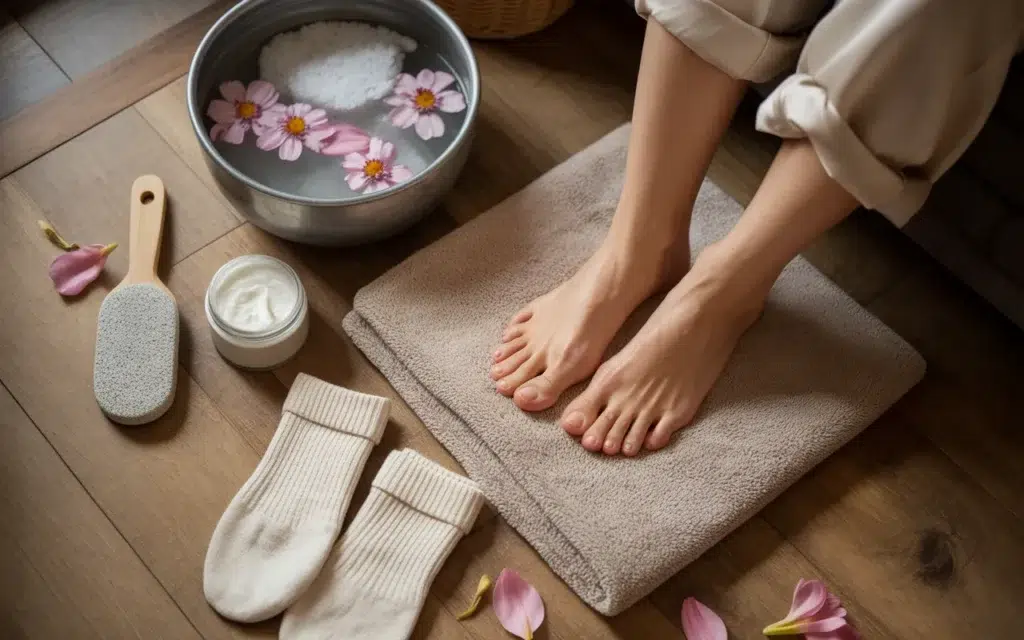
- Weekly Soak: Soak your feet in warm water with Epsom salts to soften thick skin.
- Pumice Stone: Gently buff your heels once a week to prevent cracks.
- The Sock Trick: Before bed, apply a thick layer of body butter or Vaseline to your feet and put on cotton socks. You will wake up with baby-soft feet.
Step 9: Sun Protection for the Body
We are diligent about sunscreen on our faces, but we often forget our necks, chests, hands, and legs. Sun damage is the number one cause of premature aging on the body. The skin on your chest (décolletage) is very thin and prone to sunspots and wrinkles.
If any part of your body is exposed to the sun, it needs protection. Make applying a body sunscreen part of your morning body skincare routine, not just something you do at the beach.
- Daily Use: If you are just running errands, a body lotion with SPF 15 or 30 is sufficient for exposed arms and legs.
- Active Days: If you are outdoors, use a water-resistant, broad-spectrum SPF 30 or 50.
Don’t forget the tops of your feet and the backs of your hands—these are common spots for skin cancer and sunspots.
Step 10: Consistency is Key
The most important step in any body skincare routine is simply doing it. You don’t need to do a full spa scrub and oil massage every single day. A basic routine of gentle cleansing and moisturizing daily, with exfoliation and extra treatments sprinkled in a few times a week, is enough to see a massive difference.
Listen to your body. In the winter, you might need heavier creams and oils. In the summer, you might switch to light gels and more frequent exfoliation. The goal is to stay in tune with what your skin needs.
Conclusion: Love the Skin You’re In
Building a body skincare routine is about shifting your perspective. It’s about realizing that your body is not just a vessel, but a living, breathing part of you that deserves care and respect.
By dedicating a few minutes each day to cleansing, moisturizing, and protecting your skin from the neck down, you are investing in your long-term health and confidence.
Start small. Buy a body wash that smells amazing. Put a bottle of lotion right next to your shower so you can’t miss it. Try dry brushing once and see how awake you feel. These small acts of care compound over time, resulting in skin that is soft, glowing, and resilient.
So tonight, take a little extra time in the bathroom. Treat your legs to a scrub, massage oil into your shoulders, and thank your body for all it does for you. Your skin will thank you with a radiant glow that lasts all year round.