
I used to think “sensitive skin” was just a polite way of saying “difficult.” My face was a temperamental roommate I couldn’t evict. It reacted to everything: hot water, cold wind, new laundry detergent, and especially the expensive skincare products I bought hoping they would fix me.
I spent years playing a guessing game. I’d buy a product because an influencer with perfect skin swore by it, only to wake up the next morning looking like I’d been sunburned.
I cycled through “natural” remedies, high-tech serums, and essential oils, each one promising relief and delivering only redness.
Finally, after a particularly bad reaction to a “calming” lavender face mask that left me needing ice packs, I admitted defeat. I stopped trusting the internet and made an appointment with a board-certified dermatologist. I walked in with a bag full of products and walked out with a piece of paper that seemed… underwhelming.
The routine she gave me was boring. It was unbranded. It had no fun smells or cute packaging. But I promised to follow it religiously for six weeks. And that decision changed everything.
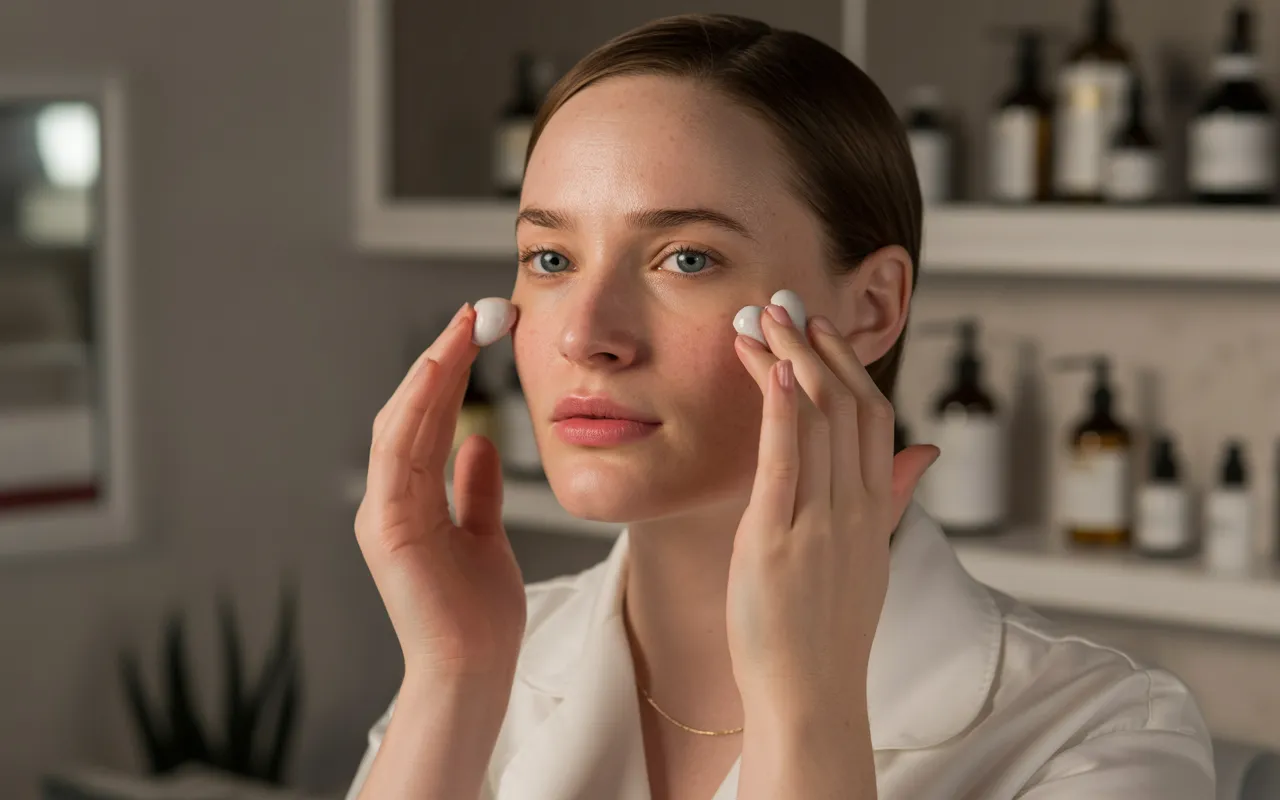
The Myth of “Sensitive Skin” Marketing
One of the first things I learned in that appointment was that I had been sabotaging myself with products labeled “for sensitive skin.”
My dermatologist explained that there is no FDA regulation for that term. A brand can slap “sensitive” on a bottle that contains fragrance, essential oils, and harsh preservatives—three of the biggest triggers for reactive skin.
I had been buying products based on the marketing on the front of the bottle, while the ingredient list on the back was screaming “danger.”
She stripped my routine down to the bones. She called it an “elimination diet” for my face. The goal wasn’t to treat wrinkles or brighten dark spots yet; it was simply to put out the fire.
My new routine for sensitive skin had three rules:
- Fragrance is the enemy. (Even natural fragrance).
- Less is more. (Keep the ingredient list short).
- Consistency is key. (Stop switching products every week).
The Morning Routine: Boring but Gentle
My mornings used to involve a foaming cleanser that left my skin feeling squeaky tight, followed by a vitamin C serum that usually stung a little.
My dermatologist banned both.
“If your skin feels tight, you’ve already damaged it,” she told me.
My new morning lineup was shockingly simple:
- Rinse with lukewarm water. No cleanser. Just water. She explained that unless I woke up covered in sweat, I didn’t need to strip my natural oils first thing in the morning.
- Moisturizer. A basic, fragrance-free cream containing ceramides.
- Mineral Sunscreen. This was non-negotiable. She explained that chemical sunscreens convert UV rays into heat, which can trigger redness in sensitive folks. Mineral sunscreens (zinc oxide or titanium dioxide) sit on top and reflect the heat away.
The first few days of skipping cleanser felt wrong. I felt unclean. But by day four, I noticed that my midday flush—the redness that usually appeared around 1 p.m.—was gone. My skin wasn’t starting the day in a deficit, so it wasn’t freaking out by lunch.

The Evening Routine: Repair and Protect
The evening was where I usually did the most damage. I loved exfoliation. I loved scrubbing away the day.
“You are scrubbing away your barrier,” my dermatologist said, looking at my grainy walnut scrub with disdain. “Sensitive skin doesn’t need to be scrubbed; it needs to be babied.”
My new evening ritual focused entirely on barrier repair:
- Gentle Cleanser. A non-foaming, creamy wash. It felt more like rubbing lotion on my face than washing it. It didn’t bubble. It didn’t tingle. It just cleaned without stripping.
- Moisturizer on Damp Skin. This was a crucial technique change. I had to apply my moisturizer within 60 seconds of washing, while my skin was still damp, to lock in the water.
- The “Glazing” Step. If I felt particularly dry, I was instructed to put a tiny layer of plain petroleum jelly on the most sensitive spots (my cheeks and eyelids).
I felt ridiculous going to bed looking like a glazed donut. But when I woke up, my skin wasn’t flaky. It was plump. The dry patches that usually plagued my nose were healing.
The Withdrawal Phase
The hardest part of this experiment wasn’t the products; it was the psychological adjustment. I missed the ritual of self-care. I missed the nice smells. I felt like I wasn’t doing enough.
Around week two, I had a moment of weakness. I wanted to use a sheet mask. I wanted that spa feeling. But I remembered the ice packs from the lavender incident and held firm.
I realized that for years, I had confused “irritation” with “efficacy.” If a product tingled, I thought it was working. If it smelled medicinal, I thought it was clinical. In reality, healthy skin shouldn’t feel like anything. It should just be comfortable.

Why Ingredients Matter More Than Price
My entire dermatologist-approved routine cost less than $50. I bought everything at the drugstore.
This was a blow to my ego. I had spent hundreds on high-end serums, convinced that the price tag equaled safety. My dermatologist explained that big mass-market brands actually have the budget for massive safety testing that smaller, boutique brands can’t afford.
She taught me to look for specific “hero” ingredients for sensitivity:
- Niacinamide: Helps calm inflammation (but only in low percentages).
- Glycerin: A humectant that is far less likely to irritate than some trendy acids.
- Colloidal Oatmeal: An absolute savior for itchiness and redness.
I started reading labels like a detective. I learned to spot hidden irritants like “limonene” or “linalool” (fragrance components) and put the bottle back on the shelf immediately.
The Results: 6 Weeks Later
By the end of the six weeks, I looked in the mirror and saw something I hadn’t seen in a decade: an even skin tone.
The constant blotchiness was gone. The texture—which I used to try to scrub away—had smoothed out because it wasn’t inflamed anymore. My pores actually looked smaller, not because they shrank, but because the skin around them wasn’t swollen.
Most importantly, my face didn’t hurt. I hadn’t realized how much low-grade pain I was living with until it stopped. The tightness, the itching, the heat—it was all quiet.
I went back for my follow-up appointment, and my dermatologist just nodded. “See?” she said. “Your skin knows how to function. You just had to stop interrupting it.”
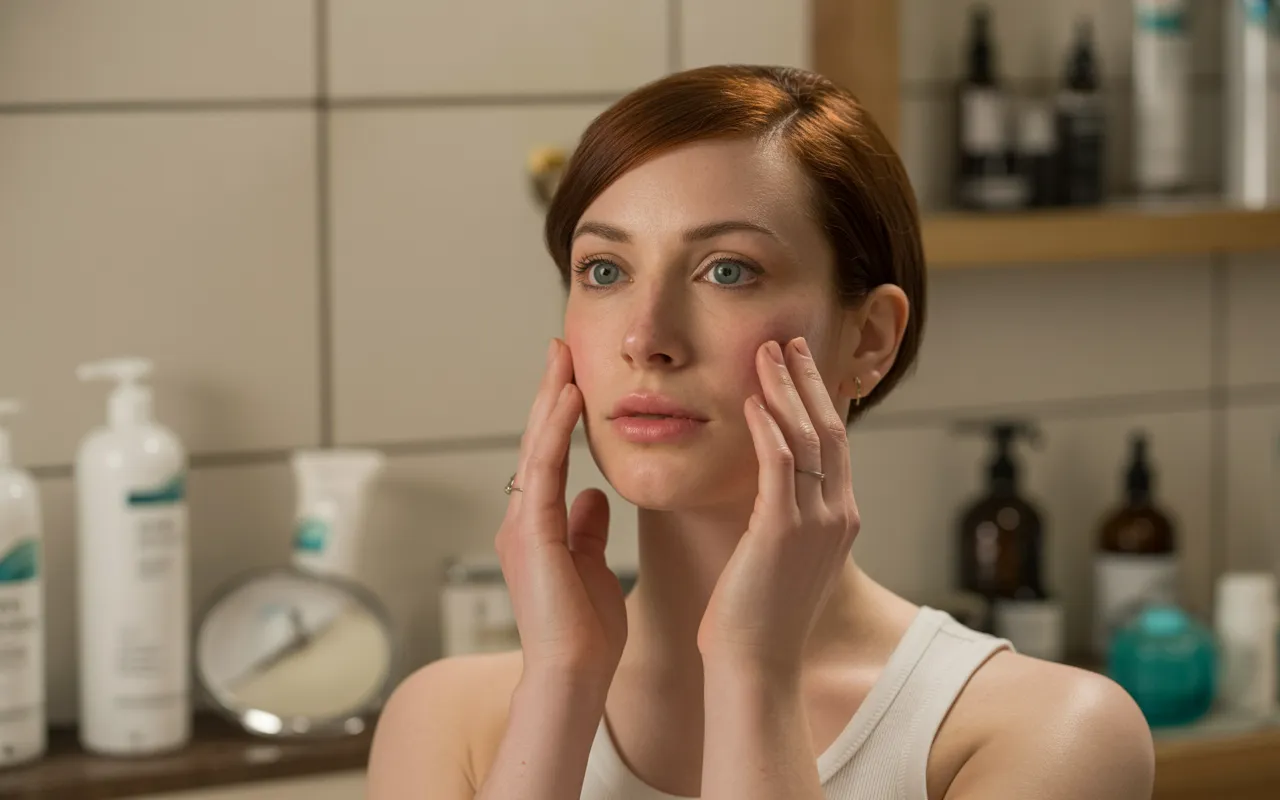
Breaking Up With Trends
The hardest part about maintaining a routine for sensitive skin is the boredom. I see new viral products on TikTok—bright pink serums, peeling masks, 10-step glass skin tutorials—and I feel a pang of FOMO.
But then I remember the stinging.
I’ve accepted that my skin is an introvert. It doesn’t like parties. It doesn’t like surprises. It likes a quiet night in with the same three friends it’s known for years.
I have slowly reintroduced one active ingredient (a very gentle retinoid, used over moisturizer), but that’s it. The days of treating my face like a chemistry experiment are over.
If You Think You Have Sensitive Skin…
If your face constantly feels like it’s fighting a battle, stop adding soldiers to the war. Stop buying “calming” products that are loaded with 20 different plant extracts.
Go back to basics. Eliminate fragrance. Eliminate exfoliation. Eliminate the noise.
It might feel unglamorous to use a plain white tube of cleanser and a tub of basic cream. It might feel boring. But waking up to skin that doesn’t hurt? That is a luxury I wouldn’t trade for anything.

Sometimes the best thing you can do for your skin is absolutely nothing at all. Trust the boring process. Your barrier is waiting to heal; you just have to give it the silence it needs.