
There was a moment about six months ago when I stood in front of my bathroom mirror, staring at a countertop cluttered with expensive glass bottles, and felt absolutely defeated. I had the exfoliator that burned “in a good way,” the three different serums that promised a glow they never quite delivered, and a moisturizer that cost more than my weekly grocery bill.
Despite all this investment—both financial and emotional—my face was a roadmap of irritation. It was tight, red, and perpetually stinging. I was doing everything “right” according to the internet. I was layering. I was active-ingredient-ing. I was 10-stepping my way to perfection. But the harder I tried to fix my skin, the angrier it got.
If you’ve ever felt like your skin is fighting back against your efforts to help it, you aren’t alone. It turns out, my devotion to a complicated routine was the very thing destroying my skin’s first line of defense.

The Tipping Point: When More Became Too Much
We live in a maximalist era of skincare. Scroll through social media for five minutes and you’ll see shelves groaning under the weight of products. We are taught that if one acid is good, two must be better. If retinol works, we should use the highest strength every single night.
I bought into this completely. I treated my face like a chemistry experiment, mixing Vitamin C in the morning with heavy exfoliants at night, throwing in niacinamide and hyaluronic acid whenever I could squeeze them in.
I thought I was being sophisticated. In reality, I was stripping away the protective lipid layer that keeps moisture in and bacteria out.
The realization didn’t come from a dermatologist (though they would have told me this immediately). It came from sheer exhaustion. One Tuesday night, too tired to go through my usual 20-minute ritual, I just washed my face, put on a basic cream, and went to bed.
When I woke up, my skin wasn’t glowing, but it was… calm. It wasn’t pulsing with that low-level inflammation I had grown used to. That small moment of peace sparked a radical idea: what if I just stopped doing so much?

Understanding What Actually Went Wrong
Before I explain the shift, we need to talk about what was actually happening. My skin wasn’t “bad” or “stubborn.” It was injured.
The skin barrier is essentially a brick wall. The skin cells are the bricks, and the lipids (oils) are the mortar holding them together. When that wall is intact, your skin looks plump and hydrated because water can’t escape. When you assault that wall with too many actives and harsh cleansers, you chip away at the mortar. The wall develops cracks. Moisture seeps out, and irritants march right in.
I had effectively jackhammered my own wall in the pursuit of “glass skin.” The stinging sensation I felt when applying moisturizer? That wasn’t the product working; it was my nerves screaming because their protective shield was gone.
The Scary Decision to Quit Everything
Going cold turkey on a complex routine feels counterintuitive. You worry that without the salicylic acid, you’ll break out. You worry that without the Vitamin C, you’ll age overnight. But I committed to a month-long experiment. I took everything off the counter except for three items.
My new routine looked embarrassingly simple:
- A gentle, non-foaming cleanser.
- A basic, ceramide-rich moisturizer.
- Sunscreen (AM only).
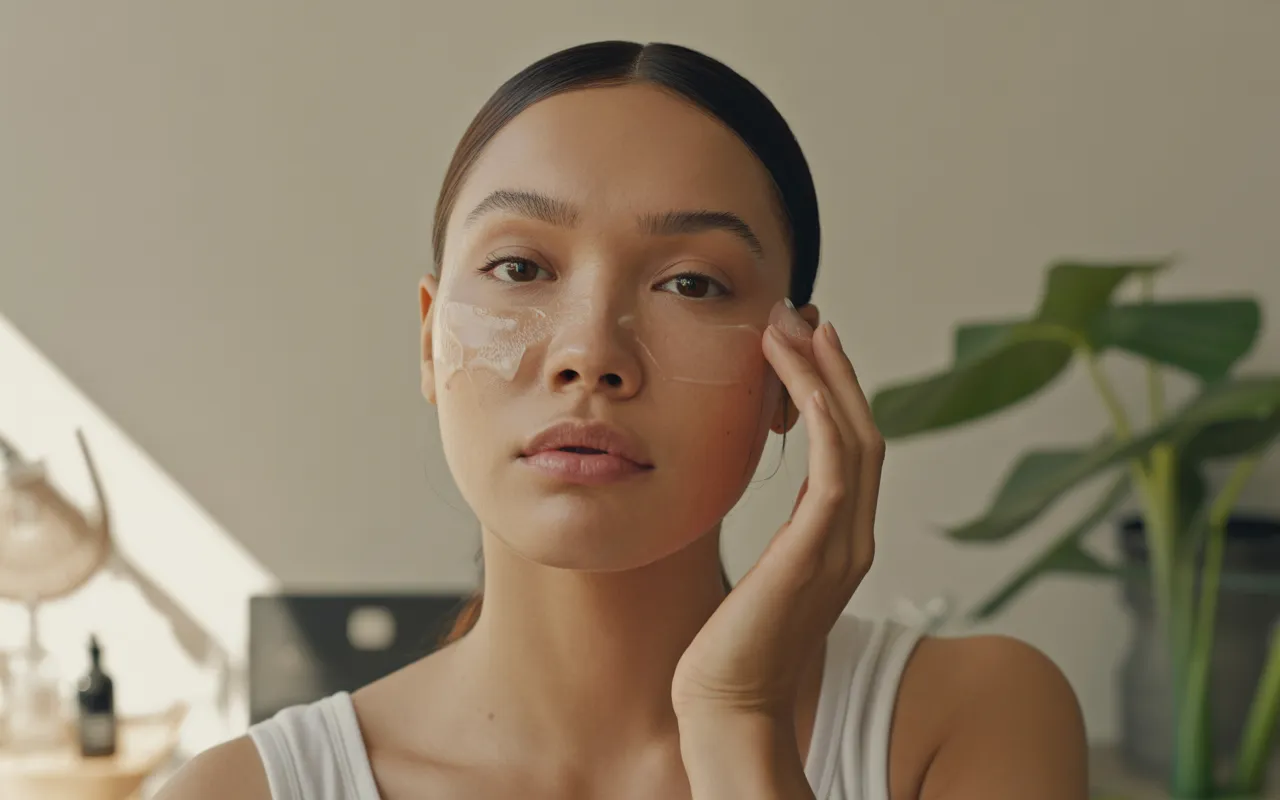
That was it. No toners, no essences, no spot treatments. Just cleaning, hydrating, and protecting.
The first week was psychologically difficult. I felt like I wasn’t doing enough. I missed the ritual of pampering myself. But physically, the changes were almost immediate. By day three, the stinging had stopped. By day seven, the redness around my nose began to fade.
Why “Boring” Products Saved Me
The magic wasn’t in some new miracle ingredient; it was in the absence of irritation. By removing the constant assault of actives, I gave my skin the breathing room it needed to repair itself.
I swapped my stripping gel cleanser for a milky lotion cleanser. It didn’t leave my face feeling “squeaky clean”—which, I learned, is actually a bad sign—but soft and pliable.
For moisturizer, I looked for ingredients that mimicked the natural components of the skin barrier: ceramides, fatty acids, and cholesterol. I stopped looking for “brightening” or “anti-aging” claims on the jar. I just wanted “barrier support.”
The result wasn’t overnight perfection. My dark spots didn’t vanish instantly. But the texture of my skin transformed. It felt sturdy again. It could handle a gust of wind without turning blotchy. It held onto water throughout the day instead of drying out by noon.
Re-learning How to Listen to My Skin
One of the most valuable lessons from this pared-back approach was learning to actually read my skin’s signals. When you are layering five products, it’s impossible to tell which one is causing a reaction or which one is actually helping.
With only three steps, the feedback loop is clear. If my skin felt dry, I knew I needed a slightly heavier moisturizer, not a hydrating serum. If a pimple appeared, I knew it was likely hormonal or dietary, not a reaction to a new product cocktail.
I also realized that “healing” isn’t passive. Your body is constantly trying to reach homeostasis. Our job isn’t to force it into submission but to provide the raw materials it needs to do the work. By flooding my skin with barrier-identical ingredients and removing the stressors, I was finally working with my biology rather than against it.

The Return of Actives (But Different This Time)
I stayed on this strict three-step diet for three full months. By the end, my barrier was solid. My face felt comfortable for the first time in years.
Eventually, I did want to address some specific concerns, like dullness. But my approach is totally different now. I don’t layer actives anymore. If I use a chemical exfoliant, I use it once a week, and I skip everything else that night except moisturizer. I treat actives like powerful medication, not daily vitamins.
I learned that you cannot treat specific skin concerns—like acne or wrinkles—if the foundation is crumbling. You have to fix the wall before you can hang the paintings.
Is Less Really More for You?
It’s tempting to believe the marketing hype that says we need a specific product for every square inch of our face. It feels productive to buy the latest serum. It feels like we are taking control.
But sometimes, control looks like stepping back. It looks like trusting that your skin knows how to function if you stop interrupting it.
If your skin feels tight, looks red, or reacts to products that used to be fine, you might be in the same boat I was. You don’t need to spend more money to fix it. In fact, saving your skin might be the cheapest thing you do all year.
My bathroom counter looks very different today. It’s mostly empty space. But when I look in the mirror, I don’t see a project that needs fixing anymore. I just see healthy skin. And honestly, that’s the best glow I’ve ever had.
Sometimes the bravest thing you can do for your beauty routine is almost nothing at all. Prioritizing your skin barrier over trends isn’t just a quick fix; it’s a long-term investment in health that pays off every single morning.