You have finally mastered your daily skincare regimen. You cleanse, you moisturize, and you even remember to wear sunscreen every single day (mostly). Your skin is looking better, but you have a feeling it could be even healthier, even more radiant.
You see people talking about face masks, exfoliation, and special treatments, and you wonder where—and when—those fit into the picture. If daily skincare is like brushing your teeth, think of a weekly routine as your deep-clean dental appointment.
A daily routine is essential for maintenance, but a dedicated weekly skincare routine is where the real transformation happens.
This is your designated time to go beyond the basics. It’s your opportunity to address specific concerns like clogged pores, dullness, or dehydration with more potent, targeted treatments that you wouldn’t use every day. Setting aside one hour, one evening a week, can dramatically accelerate your progress toward your skin goals.
This guide will walk you through a simple, yet comprehensive, 10-step weekly skincare routine designed to give you that coveted spa-facial glow right from your own bathroom.
We’ll break down each step, explaining its purpose and how it contributes to the overall health of your skin.
This isn’t about adding complexity for the sake of it; it’s about being intentional and giving your skin the extra love it deserves. Get ready to elevate your self-care Sunday (or Tuesday, or Friday!) and unlock your best skin yet.
Why You Need a Dedicated Weekly Skincare Routine
Your daily routine is focused on the core pillars of skin health: cleansing, moisturizing, and protecting. It’s the foundation upon which everything else is built.
However, these steps are primarily for maintaining your skin’s current state and defending it from daily aggressors.
A weekly skincare routine, on the other hand, is proactive and corrective. It’s your time for “project-based” skincare.
Here’s why it’s so important:
- Deep Cleansing and Decongestion: Daily cleansing is great, but over the week, oil, dead skin cells, and pollution can build up deep within your pores. A weekly routine often involves steps like clay masks that can draw out these deeper impurities, preventing blackheads and breakouts.
- Enhanced Exfoliation: Our skin naturally sheds dead cells, but this process slows down with age. A weekly exfoliation step helps to slough away this buildup, which is responsible for dullness, rough texture, and can prevent your other products from absorbing properly.
- Targeted Treatments: Potent ingredients like high-concentration acids or strong masks are too intensive for daily use. Your weekly skincare routine is the perfect time to incorporate these powerful treatments to tackle specific issues like hyperpigmentation, fine lines, or loss of firmness.
- Intense Hydration and Nourishment: While you moisturize daily, a weekly hydrating mask or treatment provides a super-boost of moisture and nutrients that can revive tired, dehydrated skin and leave it plump and glowing for days.
- The Ritual of Self-Care: Beyond the physical benefits, setting aside this time for yourself is a powerful mental health practice. It’s a chance to de-stress, relax, and do something that makes you feel pampered and cared for.
Step 1: Set the Scene and Prepare Your Mind
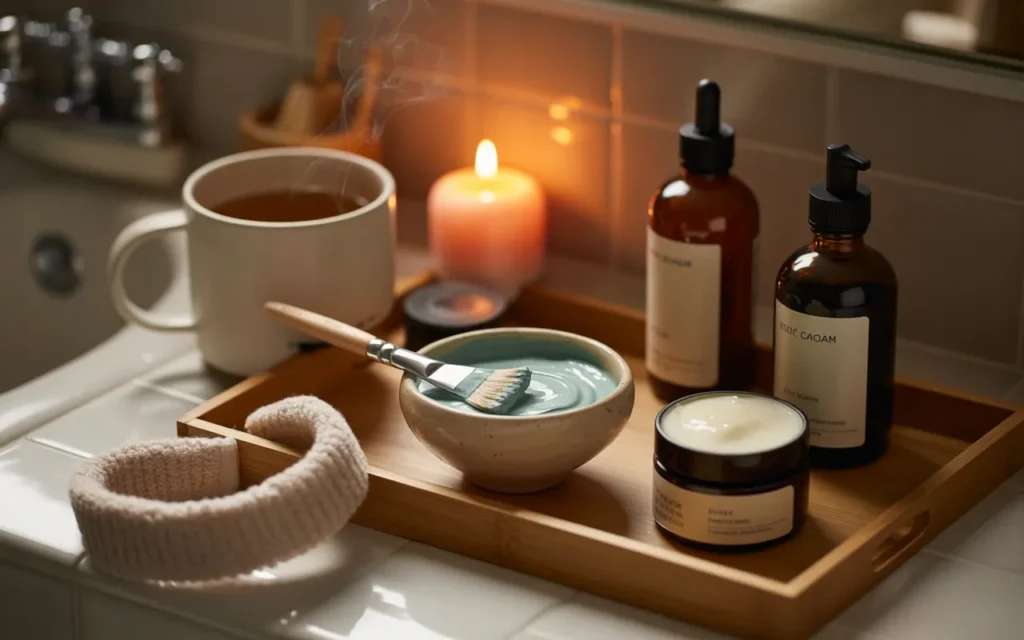
Before you even touch a product, the first step of a truly luxurious weekly skincare routine is to create a sanctuary. This isn’t just about washing your face; it’s about creating an experience. The goal is to shift your mindset from “chore” to “ritual.”
First, gather everything you will need: your products, a clean, fluffy towel, a soft headband to keep your hair back, and perhaps some reusable cotton pads. Tidy up your space. A clean counter instantly feels more calming than a cluttered one.
Next, engage your other senses. Dim the harsh overhead lights and light a scented candle with a relaxing aroma like lavender, chamomile, or sandalwood.
Put on a calming playlist—think lo-fi beats, ambient sounds, or a podcast you love. Pour yourself a glass of herbal tea or lemon water.
These small actions signal to your brain that it’s time to slow down and transition into a state of relaxation. This mental preparation makes the entire weekly skincare routine more enjoyable and effective.
Skincare Basics That Support an Effective Weekly Routine
A weekly skincare routine works best when it complements your daily habits. Understanding the foundation ensures treatments like exfoliation and masks don’t damage your skin:
- Review the skincare routine essential steps every routine is based on
- Build consistency with a simple basic skincare routine
- Avoid overuse by following the correct skincare routine order
- Understand all core skincare routine steps before adding weekly treatments
These guides help you use weekly skincare safely and effectively.
Step 2: The Deep Double Cleanse
The foundation of any good routine, especially a weekly skincare routine, is an impeccably clean canvas.
You want to ensure that all traces of makeup, sunscreen, and daily grime are completely gone so that the powerful treatments to follow can penetrate the skin effectively. This is where the double cleansing method is non-negotiable.
The First Cleanse: Melt Away the Day
Start with an oil-based cleanser (which can be a liquid oil or a solid balm). Massage it onto your dry face for a solid 60-90 seconds. Be gentle, but thorough.
Use this time to give yourself a mini facial massage, focusing on areas with tension like your jaw and temples.
The oil will work to dissolve stubborn, oil-based impurities like waterproof mascara and long-wear foundation.
After you’re done massaging, wet your hands and continue to massage your face. The oil will emulsify, turning into a milky liquid that rinses away cleanly, taking all the grime with it.
The Second Cleanse: Purify Your Skin
Now that the top layer of dirt is gone, it’s time for your second, water-based cleanse. Use your favorite gentle gel, cream, or foam cleanser. This step cleans your actual skin, removing any lingering residue and ensuring your pores are completely clear.
Spend another 60 seconds massaging this cleanser in. This two-step process ensures your skin is perfectly prepped and ready for the intensive treatments in your weekly skincare routine.
Adding Weekly Skincare to Morning and Night Routines
Weekly treatments should fit naturally into your regular schedule, not replace it. These guides show how to integrate them smoothly:
- Maintain protection with a consistent morning skincare routine
- Support recovery alongside your night skincare routine
- Keep everything balanced with a morning and night skincare routine
This ensures weekly care enhances results instead of causing irritation.
Step 3: Gentle Steam to Open Pores
This is a classic spa step that you can easily replicate at home to enhance your weekly skincare routine. A gentle steam helps to soften the skin and the contents of your pores, making subsequent extractions (if you do them) easier and deep-cleansing masks more effective.
How to Do It Safely:
There are a few ways to incorporate steam. You can invest in a facial steamer, which provides a controlled and consistent mist. However, you don’t need a special gadget.
The DIY method is simple and effective. Fill a large bowl with hot (not boiling) water. You can add a bag of chamomile tea or a few drops of a calming essential oil like lavender for an aromatherapeutic benefit.
Drape a towel over your head to create a tent and lean over the bowl, keeping your face about 10-12 inches away from the water.
Steam your face for 5-7 minutes. It should feel warm and pleasant, not uncomfortably hot. This gentle heat boosts circulation, hydrates the skin, and gives you that dewy, fresh-from-the-sauna glow.
Step 4: The Exfoliation Step (Physical or Chemical)
This is a cornerstone of your weekly skincare routine. Exfoliation is the process of removing the buildup of dead skin cells that can make your complexion look dull, feel rough, and clog your pores.
Doing this once a week reveals the fresher, brighter skin underneath and allows your other products to work much more efficiently.
Choosing Your Exfoliant:
There are two main types of exfoliation. You don’t need to do both; choose the one that best suits your skin type and preference.
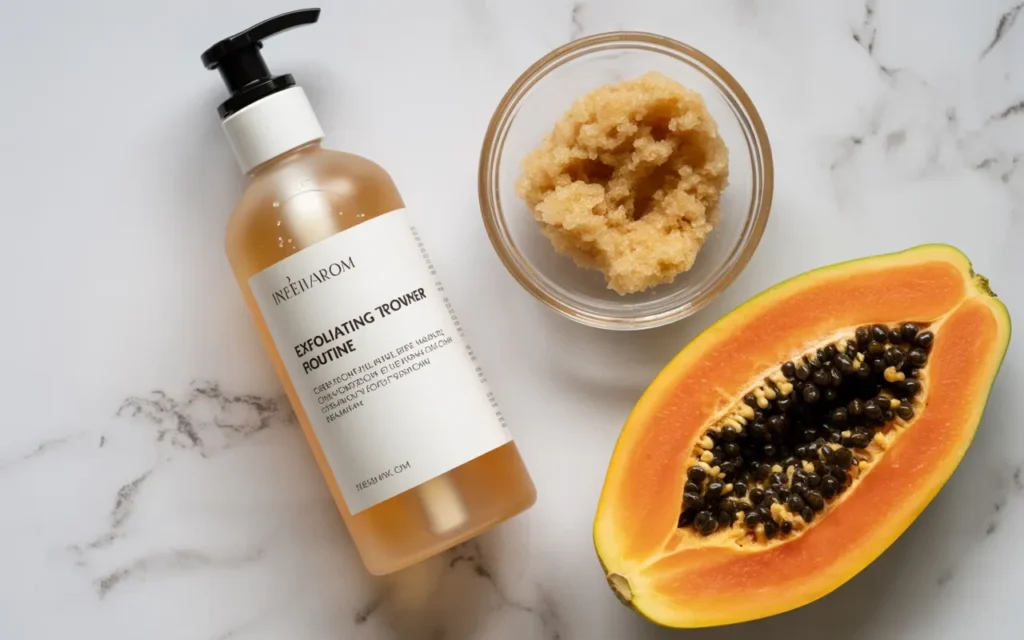
- Chemical Exfoliation: This method uses acids or enzymes to dissolve the “glue” that holds dead skin cells to the surface. It’s often considered more effective and can be gentler than scrubbing.
- AHAs (Alpha Hydroxy Acids): Like glycolic and lactic acid. These are water-soluble and work on the skin’s surface. They are great for improving skin texture, fading dark spots, and boosting radiance. Ideal for normal to dry skin.
- BHAs (Beta Hydroxy Acids): The most common is salicylic acid. It’s oil-soluble, meaning it can penetrate deep into the pores to clear out clogs. It’s the best choice for oily, combination, and acne-prone skin.
- Enzymes: Fruit enzymes from pineapple or papaya offer a very gentle form of exfoliation, perfect for sensitive skin.
- Physical Exfoliation: This involves manually scrubbing the skin. Avoid harsh scrubs with large, jagged particles like crushed nuts, as they can cause micro-tears. Instead, opt for gentle scrubs with fine, uniform particles like jojoba beads, fine sugar, or ground oats.
Apply your chosen exfoliant to clean, damp skin and either leave it on (for a chemical exfoliant) or gently massage (for a physical one) before rinsing thoroughly.
Weekly Skincare Routines You Can Maintain Easily
Weekly skincare doesn’t need to be complicated. These guides help you keep things simple and sustainable:
- A gentle beginner skincare routine before adding treatments
- A low-effort simple skincare routine for everyday balance
- Stay consistent with a reliable daily skincare routine
- Learn how weekly care fits into the best skincare routine
These options help you get the benefits of weekly skincare without overdoing it.
Step 5: The Deep-Cleansing or Purifying Mask
Now that your skin is freshly exfoliated and your pores are open from the steam, it’s the perfect time for a deep-cleansing mask.
This step in your weekly skincare routine acts like a vacuum cleaner for your pores, drawing out deep-seated impurities, excess oil, and toxins.
Choosing Your Purifying Mask:
The most effective purifying masks are typically clay-based. Different clays have different properties:
- Bentonite Clay: This is a highly absorbent clay, making it a powerhouse for very oily and congested skin. It effectively soaks up excess sebum and can help to tighten the appearance of pores.
- Kaolin Clay (White Clay): This is one of the mildest clays, making it suitable for sensitive or normal-to-dry skin types that still need a gentle purification. It cleanses without stripping the skin of its natural oils.
- French Green Clay: Known for its detoxifying properties, this clay is great for absorbing impurities while also providing some mineral benefits to the skin.
- Charcoal Masks: Activated charcoal works like a magnet to attract and bind to dirt and oil, pulling them out of your pores.
Apply a thin, even layer of your chosen mask, avoiding the delicate eye and mouth area. Leave it on for 10-15 minutes.
A key tip is to not let it dry completely to the point where it’s cracking and tight, as this can dehydrate your skin. Rinse it off while it’s still slightly tacky.
Step 6: The Hydrating or Nourishing Mask
After a deep-cleansing mask has pulled impurities out, the next step in a well-rounded weekly skincare routine is to put nourishment and hydration back in.
Following up a purifying mask with a hydrating one is a pro-level spa trick that leaves your skin incredibly balanced, plump, and glowing.
If your skin is more dry than oily, you might even skip the purifying mask and go straight to this step.
This is your time to pamper your skin with a super-dose of moisture.
Types of Hydrating Masks:
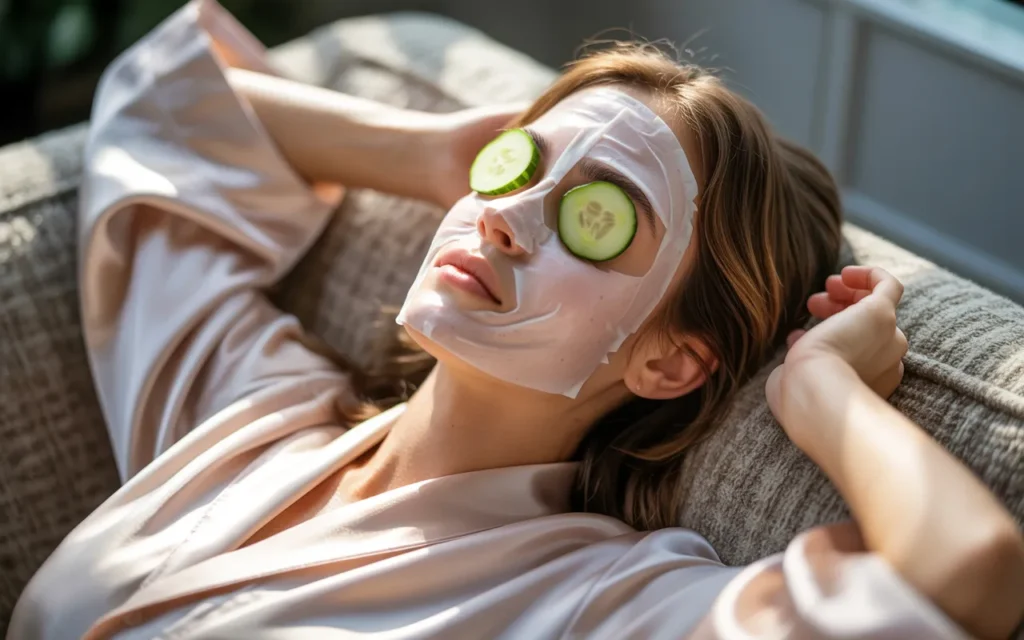
- Sheet Masks: These are single-use masks made of fiber soaked in a hydrating serum. They are incredibly convenient and create an occlusive barrier that forces the ingredients into your skin. Look for ones with hyaluronic acid, glycerin, or centella asiatica.
- Cream or Gel Masks: These masks come in a jar or tube and often have a rich, comforting texture. They are perfect for delivering soothing and plumping ingredients. Look for formulas with ceramides, squalane, or honey.
- Sleeping Masks/Packs: These are designed to be the last step of your routine, worn overnight. They are fantastic for locking in extreme moisture and are a great option if you have very dry or dehydrated skin.
Apply your hydrating mask and let it sit for 15-20 minutes (or overnight, if it’s a sleeping mask). This is the perfect time to truly relax—lie down, put on some soothing eye pads, and just be still.
Step 7: Tone and Rebalance
After you’ve rinsed off your final mask, your skin needs to be rebalanced. This is where a toner comes in.
In a weekly skincare routine, the toning step helps to remove any final traces of your face mask, brings your skin’s pH back to its happy, slightly acidic state, and provides a light layer of hydration to prep for your finishing products.
Choose a gentle, alcohol-free toner. Hydrating toners with ingredients like rose water, hyaluronic acid, or glycerin are perfect at this stage.
You can either swipe it on with a reusable cotton round or, for an extra boost of hydration, pour a small amount into your palms and gently press it into your skin.
Step 8: Apply Targeted Serums and Treatments
Now that your skin is ultra-clean, exfoliated, and hydrated, it is in the optimal state to receive active ingredients.
This step of your weekly skincare routine is where you can use your most potent, targeted treatments to address your specific skin concerns.
The products you apply now will penetrate more deeply and work more effectively than they would on a normal day.
Customizing Your Treatment:
- For Hyperpigmentation or Dark Spots: This is a great time to use a serum with ingredients like niacinamide, alpha arbutin, or Vitamin C to help brighten the skin.
- For Fine Lines and Anti-Aging: Apply a peptide serum to help support collagen production or a gentle retinol/retinoid if it’s part of your regimen.
- For Dehydration: A dedicated hyaluronic acid serum applied to damp skin will act like a drink of water for your face, drawing in moisture and plumping up fine lines.
- For Redness and Irritation: A soothing serum containing centella asiatica (cica), green tea extract, or oat extract can help calm the skin.
Apply a few drops of your chosen serum and gently pat it into your skin until absorbed.
Step 9: The Final Seal – Rich Moisturizer or Facial Oil
This is the crucial final step to lock in all the benefits of your elaborate weekly skincare routine.
After applying your serums, you need to seal everything in with an occlusive layer that will prevent moisture from evaporating and allow the active ingredients to work their magic overnight.
Your Sealing Options:
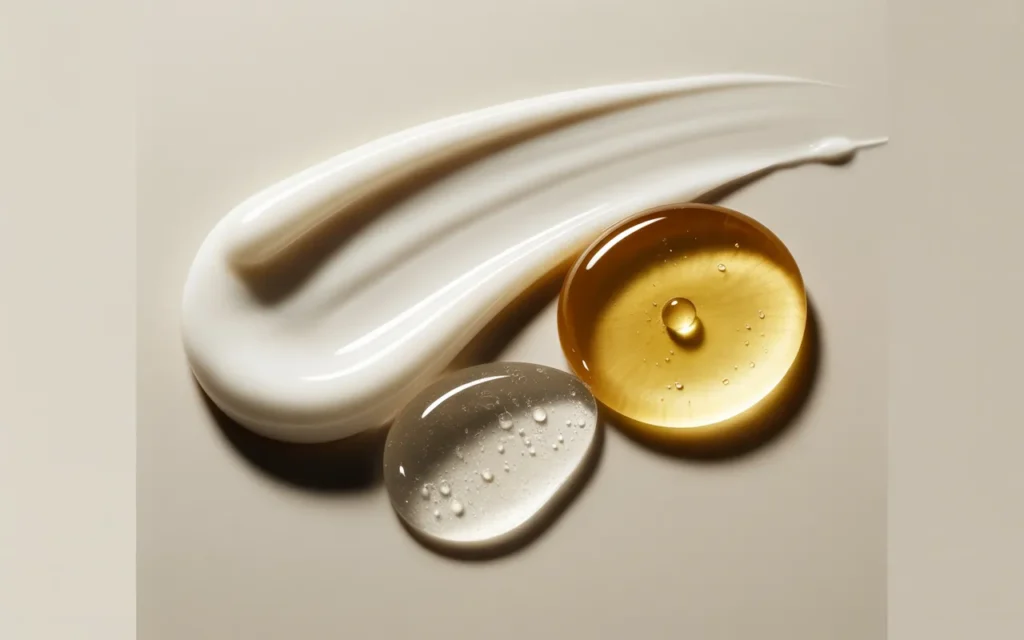
- A Rich Night Cream: Your weekly treatment night is the perfect time to use a richer, more nourishing moisturizer than you might use daily. Look for creams with barrier-supporting ingredients like ceramides, shea butter, and squalane.
- A Facial Oil: If your skin loves oils, this is a beautiful way to finish your routine. A few drops of a nourishing oil like rosehip, marula, or argan oil will provide a final layer of vitamins and fatty acids and give you an incredible glow. You can apply it on its own or press a few drops over your moisturizer for an extra-occlusive seal.
Don’t forget your neck and décolletage! Gently massage your moisturizer or oil in, using upward strokes.
Step 10: Nourish From the Inside Out
The final, and often forgotten, step of a holistic weekly skincare routine has nothing to do with what you put on your face. It’s about what you put in your body. Your skin is a reflection of your internal health.
After you’ve completed your topical routine, take a few moments to rehydrate your body. Drink a large glass of water.
Make a cup of calming, skin-friendly herbal tea like spearmint (great for hormonal acne), chamomile (anti-inflammatory), or rooibos (packed with antioxidants).
Then, aim for a good night’s sleep. Sleep is when your skin’s repair processes are at their peak.
All the wonderful treatments you just applied will work their hardest while you are resting. By getting 7-9 hours of quality sleep, you are maximizing the investment you just made in your skin.
Conclusion: Investing in Yourself, One Week at a Time
A weekly skincare routine is so much more than a collection of steps; it’s a profound act of self-care. It’s a declaration that you are worthy of time, attention, and pampering.
By consistently dedicating one evening a week to this ritual, you are not only deep cleaning, exfoliating, and nourishing your skin, but you are also calming your mind and soothing your spirit.
Don’t feel pressured to perform all ten steps right away. Start with what feels manageable—perhaps just adding a weekly exfoliating step and a mask.
As you grow more comfortable, you can build upon that foundation. The most important thing is to be consistent.
Embrace the process, enjoy the sensory experience, and watch as your skin transforms. A dedicated weekly skincare routine is your secret weapon for achieving that healthy, lit-from-within glow that no amount of daily maintenance alone can replicate. You deserve this moment of peace and rejuvenation.