Navigating the world of skincare can feel like learning a new language. With thousands of products, from serums and essences to oils and toners, it’s easy to feel overwhelmed.
You might find yourself wondering if you truly need a dozen products or if a simple bar of soap will do.
The truth is, effective skincare isn’t about complexity or cost; it’s about consistency and understanding the fundamental needs of your skin.
A solid routine provides the support your skin needs to function at its best. It helps remove impurities, replenish moisture, and protect against environmental damage.
The key is to build a regimen with the right skincare routine steps tailored to your unique skin type. What works wonders for your friend with oily skin might not be the best choice for your dry complexion.
This guide is designed to be your go-to resource, no matter where you are on your skincare journey.
We will break down the essential skincare routine steps, explaining the purpose behind each one and offering advice for every skin type—oily, dry, combination, sensitive, and normal.
By the end, you’ll have the knowledge and confidence to build a simple, effective routine that leaves your skin healthy, happy, and glowing.
First, Understand Your Skin Type
Before diving into the skincare routine steps, the most critical first move is to identify your skin type.
Using products designed for the wrong type can lead to irritation, breakouts, or dryness. Your skin type determines the texture and ingredients that will work best for you.
- Oily Skin: Characterized by a noticeable shine, especially in the T-zone (forehead, nose, and chin). You may have larger, more visible pores and be prone to blackheads and acne. Your skin produces an excess of sebum, its natural oil.
- Dry Skin: Often feels tight, rough, or even flaky. It may look dull and show fine lines more easily. Your skin produces less sebum than it needs, so it craves both hydration (water) and lipids (oil).
- Combination Skin: The most common type, featuring a mix of oily and dry areas. Typically, the T-zone is oily, while the cheeks are normal or dry. The challenge here is finding balance.
- Sensitive Skin: Reacts easily to new products or environmental changes. You might experience redness, stinging, itching, or burning. This skin type requires gentle, fragrance-free formulas.
- Normal Skin: The “balanced” skin type. It is not overly oily or dry, has small pores, and rarely experiences breakouts or sensitivity.
Skincare Routine Fundamentals You Should Know
Understanding skincare routine steps becomes much easier when you know the core structure behind them. These guides explain why each step exists and how they work together:
- Learn the skincare routine essential steps used in every routine
- Start with a simplified basic skincare routine
- Avoid common mistakes by following the skincare routine order
- Build consistency with a proven daily skincare routine
These resources help you understand skincare steps more clearly and apply them correctly.
You can determine your skin type with a simple test. Wash your face with a gentle cleanser, pat it dry, and wait for about 30-60 minutes.
Then, observe how it looks and feels. Is it shiny all over? Oily. Does it feel tight and parched? Dry. Is it just your nose and forehead that are shiny? Combination.
The Morning Skincare Routine Steps: Protection is Key
Your morning routine is all about preparing your skin for the day and defending it against the elements. The focus should be on hydration and creating a shield against UV rays and pollution.
Step 1: Cleanse Gently
The first of your morning skincare routine steps is to create a fresh canvas. As you sleep, your skin produces oil and sheds dead cells. A gentle cleanse removes this buildup without stripping your skin of its essential moisture.
- For Oily & Acne-Prone Skin: A light gel or foaming cleanser is ideal for removing excess sebum. Look for formulas with salicylic acid if you’re prone to breakouts, but ensure it’s not overly drying.
- For Dry & Sensitive Skin: You may not need a full cleanse. Simply splashing your face with lukewarm water can be enough. If you prefer to wash, a hydrating cream or milk cleanser that doesn’t foam is your best friend.
- For Combination & Normal Skin: A gentle, low-foaming gel or cream cleanser works perfectly to balance the skin without causing issues.
The goal is for your skin to feel refreshed, not tight. That “squeaky clean” feeling is a sign that your skin’s protective barrier has been compromised.

Step 2: Apply an Antioxidant Serum
This is a powerful, protective step that elevates your morning routine. Antioxidants are molecules that neutralize free radicals—damaging particles from UV light and pollution that lead to premature aging.
Vitamin C is the gold-standard antioxidant for morning use. It not only protects your skin but also helps brighten your complexion and fade dark spots over time.
A few drops applied to clean, dry skin provide a vital layer of defense that works in synergy with your sunscreen.
- For All Skin Types: Look for a Vitamin C serum with L-ascorbic acid, but be mindful of the concentration. Start with a lower percentage (around 10%) if you have sensitive skin to avoid irritation.
How Skincare Steps Change Between Morning and Night
The same skincare steps can have different purposes depending on the time of day. Learn how to adapt them for better results:
- Use protective products in your morning skincare routine
- Focus on repair and recovery with a night skincare routine
- Combine both seamlessly using a morning and night skincare routine
This ensures each step works in harmony with your skin’s natural cycle.
Step 3: Hydrate with Moisturizer
Every single skin type needs a moisturizer. It replenishes hydration and creates a barrier to prevent moisture loss throughout the day.
For your morning routine, choose a lightweight formula that absorbs quickly and layers well under sunscreen.
- For Oily Skin: An oil-free gel or water-cream moisturizer will provide hydration without feeling heavy or clogging pores.
- For Dry Skin: A lotion or cream containing hydrating ingredients like hyaluronic acid and barrier-supporting ceramides will offer more substantial moisture.
- For Combination Skin: A lightweight lotion provides a perfect balance, hydrating dry areas without overwhelming oily zones.
- For Sensitive Skin: Choose a fragrance-free formula with soothing ingredients like centella asiatica or oatmeal.
Step 4: Protect with Sunscreen (Non-Negotiable)
This is the most critical of all skincare routine steps. Daily sunscreen use is the single most effective way to prevent premature aging and protect against skin cancer. UV rays are present every day, even when it’s cloudy or you’re indoors near a window.
- For All Skin Types: Choose a broad-spectrum sunscreen with at least SPF 30. There are two main types:
- Chemical Sunscreens: Absorb UV light and convert it to heat. They are typically lightweight and rub in invisibly.
- Mineral (Physical) Sunscreens: Use zinc oxide and titanium dioxide to physically block UV rays. They are very gentle and ideal for sensitive skin, though some formulas can leave a white cast.
Apply sunscreen generously as the very last step of your morning routine, after your moisturizer has absorbed.

The Night Skincare Routine Steps: Repair and Renew
Your night routine is your opportunity to cleanse away the day and deliver potent, restorative ingredients to your skin. While you sleep, your skin’s regeneration process is at its peak, making it the perfect time for targeted treatments and deep nourishment.
Step 1: Double Cleanse to Remove Impurities
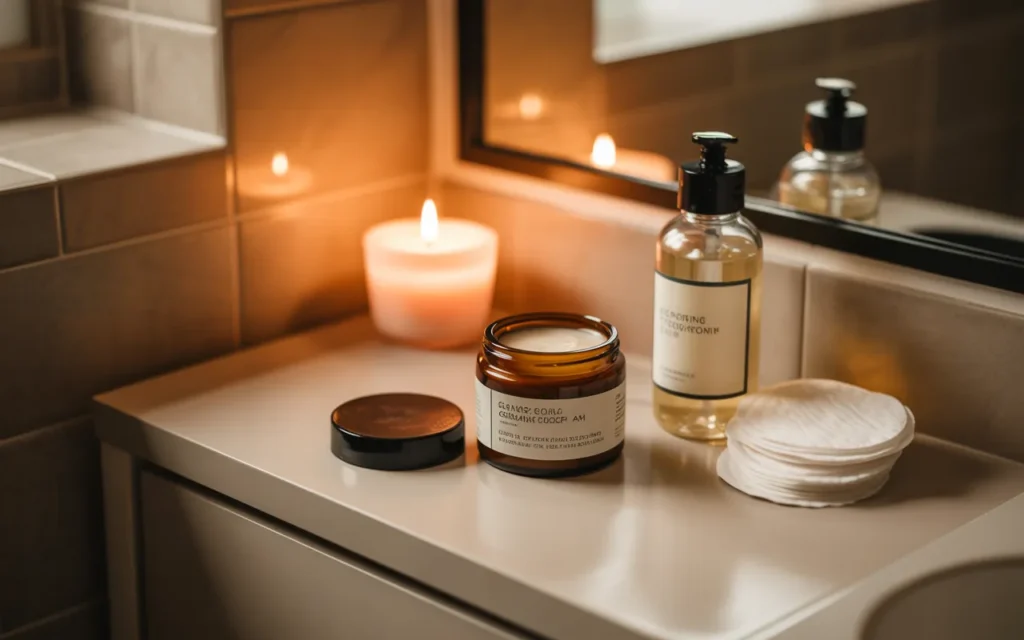
If you wear makeup or sunscreen, a single wash won’t cut it. The double cleansing method is a game-changer for getting your skin truly clean.
First Cleanse (Oil-Based): Start with a cleansing oil or balm. Massage it onto dry skin to dissolve makeup, sunscreen, and excess sebum. The oil binds to these impurities, allowing them to be rinsed away effortlessly.
Second Cleanse (Water-Based): After rinsing the oil cleanser, follow up with your regular gel, cream, or foam cleanser. This step removes any remaining residue and cleanses your actual skin, ensuring your pores are free of dirt and bacteria. This method is one of the most effective skincare routine steps for preventing breakouts.
Step 2: Exfoliate or Use a Mask (2-3 Times a Week)
This is not an every-night step, but incorporating it a few times a week will dramatically improve your skin’s texture and radiance. Exfoliation removes the buildup of dead skin cells that can cause dullness and clogged pores.
- For Oily & Acne-Prone Skin: Chemical exfoliants with Beta Hydroxy Acids (BHAs), like salicylic acid, are excellent for deep cleaning pores.
- For Dry & Normal Skin: Alpha Hydroxy Acids (AHAs), like glycolic or lactic acid, work on the skin’s surface to smooth texture and boost glow.
- For Sensitive Skin: Opt for a very gentle AHA like mandelic acid or use a mild enzyme mask. Avoid harsh physical scrubs.
On nights you don’t exfoliate, you could use a face mask. Clay masks are great for detoxifying oily skin, while hydrating sheet masks are a treat for all skin types.
Easy Skincare Routines Based on Step Simplicity
If a full routine feels overwhelming, these guides show how to follow skincare steps in a simpler, more manageable way:
- A beginner-friendly beginner skincare routine
- A no-fuss simple skincare routine
- Discover what works best in the best skincare routine
- Maintain consistency without overspending using an affordable skincare routine
These options help you follow skincare steps without confusion.
Step 3: Apply Toner or Essence
After cleansing, your skin benefits from a quick layer of hydration to rebalance its pH and prepare it for the steps that follow.
Modern toners and essences are watery liquids packed with beneficial ingredients. They act like a primer for your skin, dampening it so that your serums and moisturizers can absorb more effectively.
- For All Skin Types: Pour a small amount into your palms and gently press it into your face and neck. Look for hydrating ingredients like glycerin, hyaluronic acid, or rosewater.
Step 4: Use Targeted Serums
The serum step is where you can customize your routine to address your main skin concerns. Serums are concentrated formulas that deliver active ingredients deep into the skin.
- For Anti-Aging: Retinol (a Vitamin A derivative) is the gold standard. It speeds up cell turnover and boosts collagen but should be introduced slowly (starting 1-2 times a week) as it can be irritating.
- For Hydration: A hyaluronic acid serum can be used by all skin types for a plumping boost of moisture.
- For Brightening & Pores: Niacinamide is a versatile ingredient that helps control oil, minimize the appearance of pores, and even out skin tone.
Step 5: Don’t Forget Eye Cream
The skin around your eyes is extremely thin and delicate, making it the first place to show signs of aging and fatigue. A dedicated eye cream is formulated to be gentle enough for this area.
- For All Skin types: Using your ring finger, gently tap a pea-sized amount along the orbital bone. Look for peptides to help with fine lines or caffeine to reduce puffiness.
Step 6: Seal with a Night Cream
This is the final, crucial step to lock in all the products you’ve applied. A night cream is typically richer than a day moisturizer, designed to create a protective seal that prevents moisture loss while you sleep.
- For Dry Skin: A thick cream with ceramides, shea butter, and squalane will deeply nourish and repair the skin barrier.
- For Oily & Combination Skin: A gel-cream or sleeping mask provides hydration without feeling heavy. Don’t skip this step, as even oily skin needs moisture.
- For Sensitive Skin: Choose a rich, soothing, fragrance-free cream to calm the skin overnight.
Conclusion: Consistency is the Most Important Step
Building a routine with the right skincare routine steps can feel like a project, but it doesn’t have to be complicated.
The foundation for every skin type is simple: cleanse, moisturize, and protect in the morning; cleanse and repair at night. Everything else is a bonus that you can add as you get more comfortable.
The most powerful ingredient in any regimen isn’t a rare extract or a miracle acid—it’s consistency.
Sticking to your routine day in and day out is what allows the products to work and deliver visible, lasting results.
Be patient with your skin and with yourself. Listen to what it needs, introduce new products one at a time, and enjoy the small ritual of self-care you are creating. By following these essential skincare routine steps, you are investing in the long-term health and radiance of your skin.